This is part two of my cycling trip across Okinawa back in 2015. If you haven’t checked out the first part, you can find it here.
The Land of The Forgotten
‘O divine gods who dwell beneath this land… You have long protected us through the generations… These mountains and rivers we have long called our own… we return them to you!’ Sota says as he prays to the gods in the Ever-After.
This comes from a moment in the film, Suzume (2022). If you’ve seen it, you’ll probably remember that much of its story lingers on forgotten places and depopulation in Japan’s countryside. While some viewers might read this as a recent phenomenon, an outcome of the country’s ongoing drift from rural areas to cities, it doesn’t take much digging to realise that this has been quietly unfolding for quite some time.
‘You’re going there? But there’s nothing up there!’
It was the third day of our six-day trip across Okinawa. The hostel owner looked genuinely shocked when we showed them our planned route.
‘Well, be careful,’ he added after a pause. ‘It’s very mountainous, and there’s no one around to help if you run into trouble.’
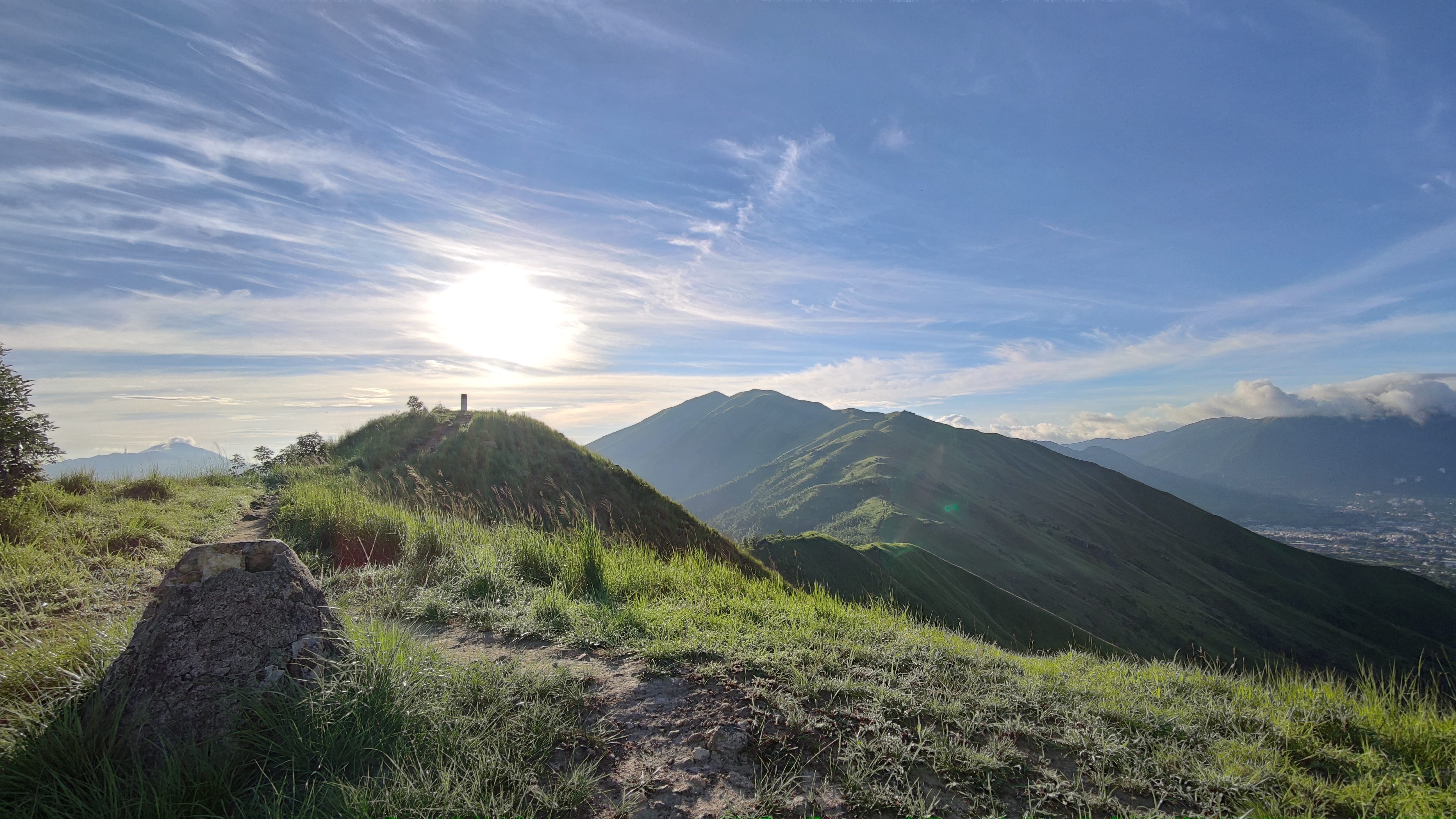
Truth be told, I’d been quietly dreading this day for a while. It was, without question, the most demanding stretch of the trip, a full day of cycling 90 km through Okinawa’s most rural region, Yanbaru National Park.
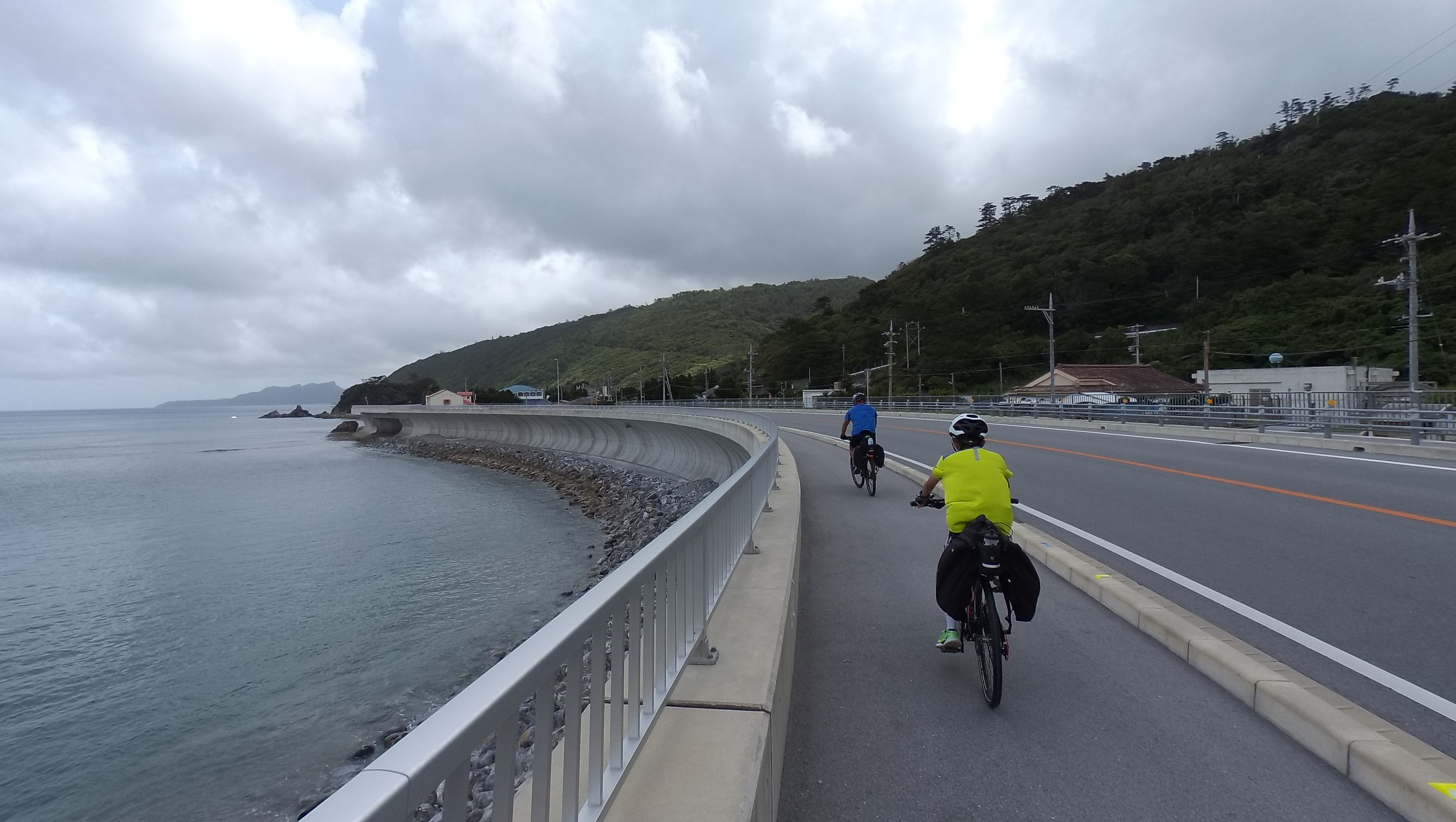
While most of the morning was fairly forgiving, cruising along the coastline toward Cape Hedo, the northernmost tip of the main island, no sooner had we left the viewpoint behind than my fears were realised: a 400-meter climb now stood between us and the other side of the island. With a pack on the back of my bike as heavy as an anvil, I could feel the front wheel trying to lift off with every pedal stroke.
As we finally reached the far side of the island’s coast, Dad spotted a cafe on Google Maps just 2 km ahead.
‘What do you say we grab lunch there? They got French Toast,’ he asked.
At that point, I would’ve said yes to durian.
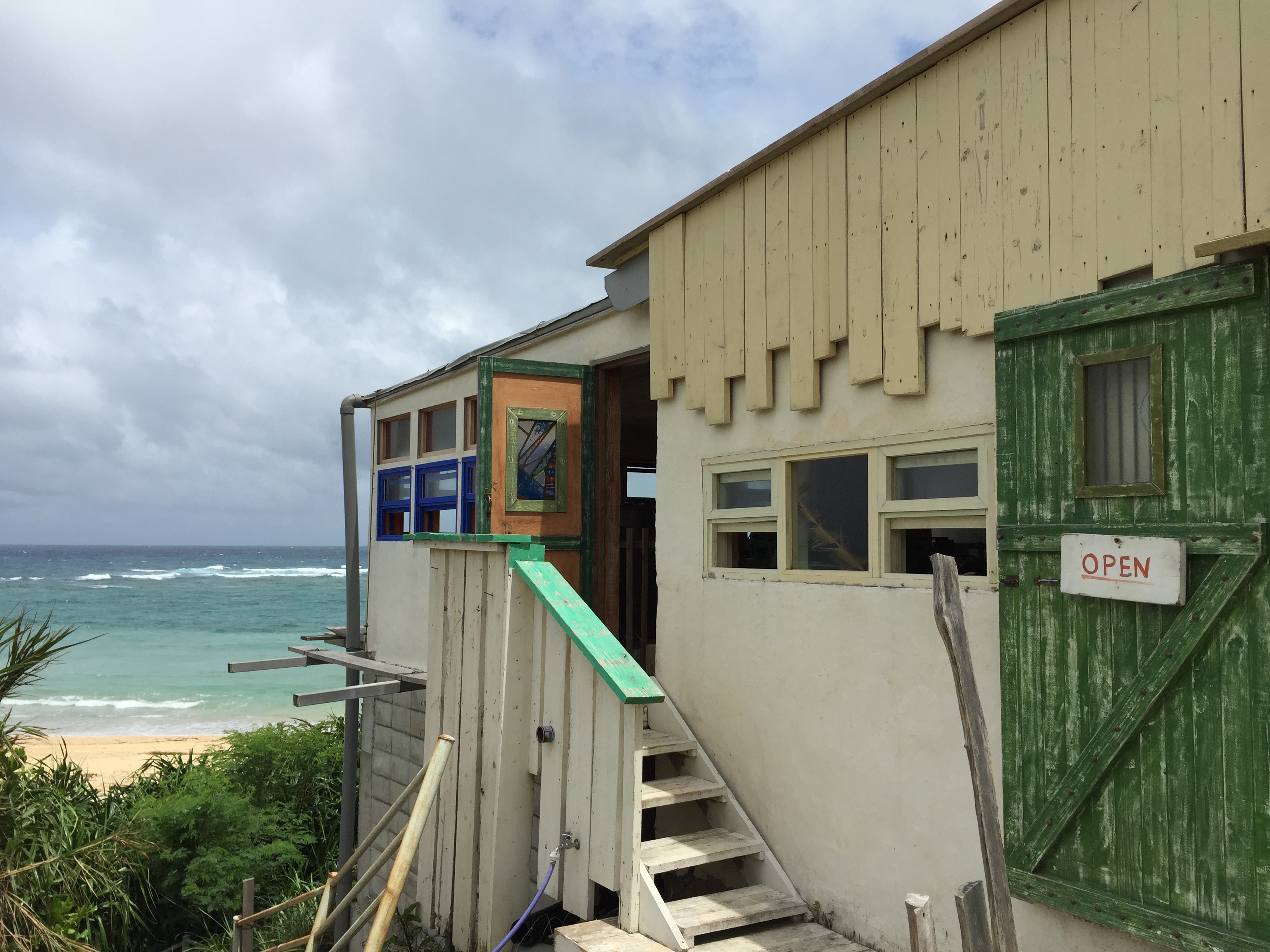
If you follow any Japan travel content online, you’ve probably seen those shorts featuring gorgeous hotel rooms or restaurants with insane ocean views, like the whole place is hovering above the water. CAFE 水母 is exactly that kind of spot. Run by a sweet couple, the cafe has terrace seating that looks straight down onto the beach. And somehow, even though it was in the absolute middle of nowhere (I’m not exaggerating, there’s literally nothing else for miles), it was absolutely packed.
I suppose if there’s one thing to take away from it all, it’s that you never quite know when you’ll stumble upon a charming little kissaten hidden away in the Japanese countryside.
Our hostel for the night was much the same. Nestled on the edge of Higashi, Canaan Slow Farm had this Southwestern New Mexico feel going on, with earthy walls, a rounded interior and exposed wooden beams. It’s probably the last thing you’d expect in such a quiet Japanese village.
For anyone hoping to visit both of these places, though, I’ve got some unfortunate news. Circling back to what I mentioned earlier about depopulation, on a return trip five years later, we found that both the cafe and the hostel had been closed permanently. CAFE 水母 had disappeared entirely, replaced by overgrown bushes where the building once stood. The hostel was abandoned, too, and the decaying structure made it abundantly clear that it hadn’t been touched in years. If you didn’t know it had been there, you’d never guess it existed.
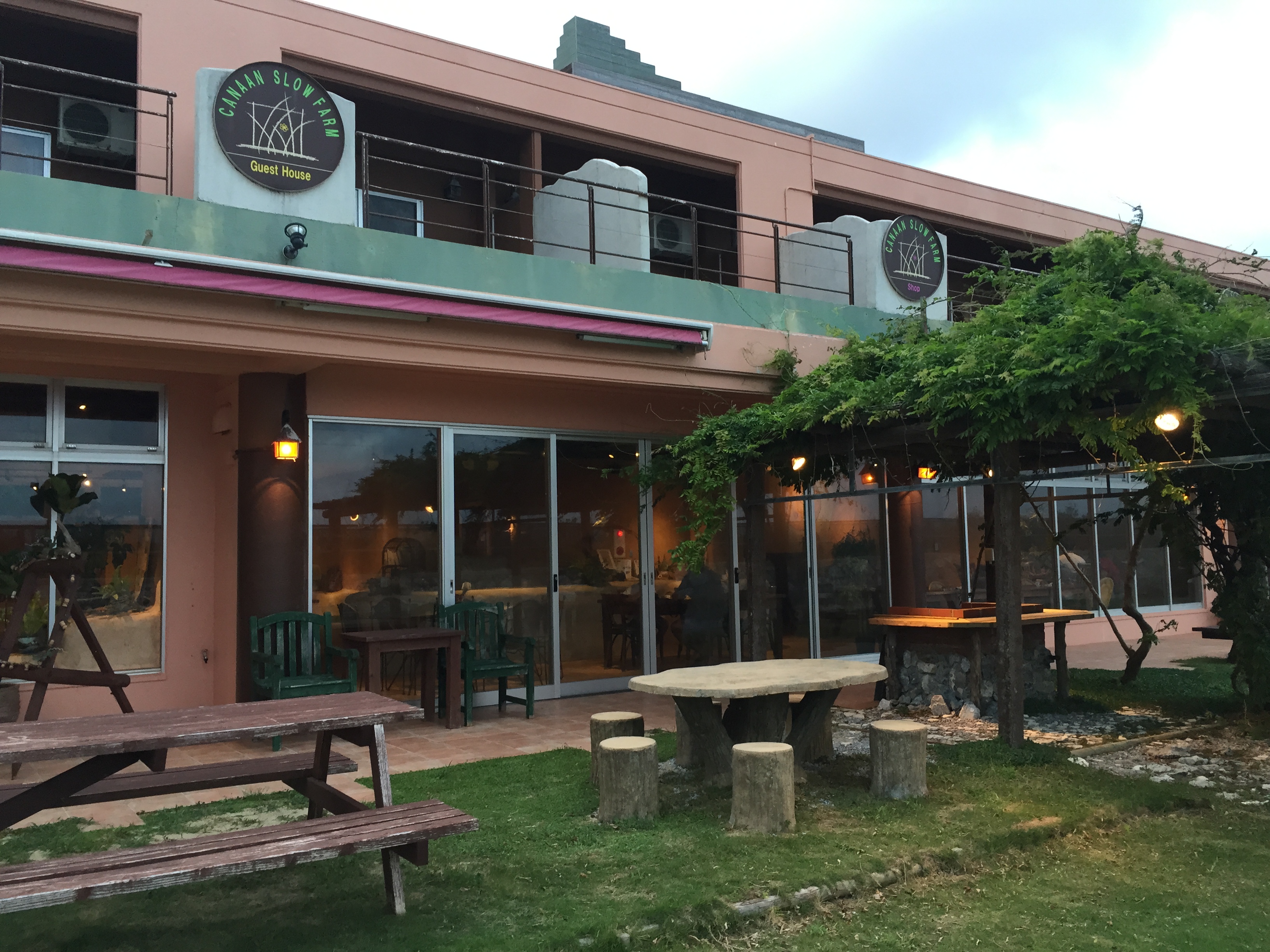
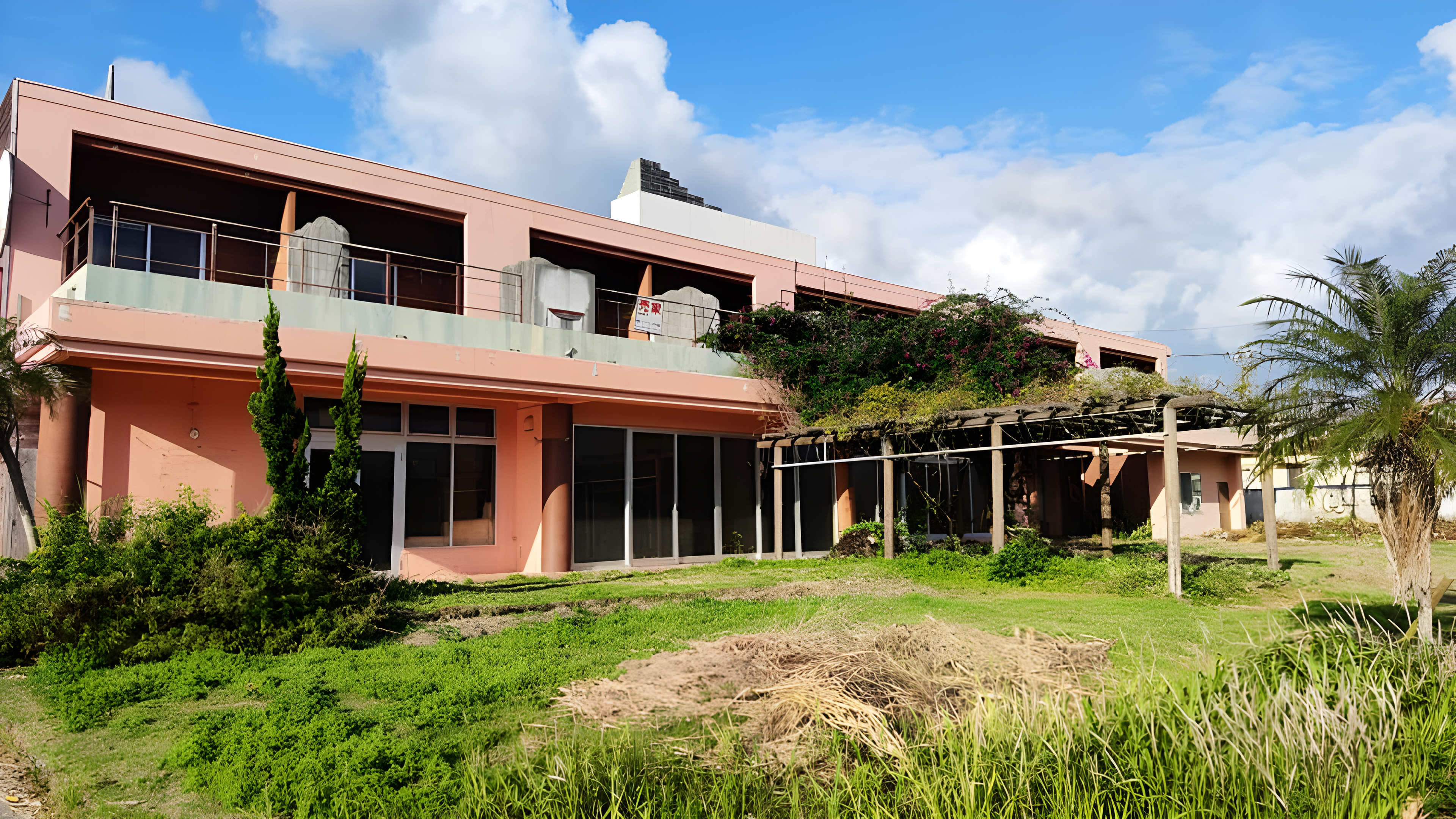
This was my first time experiencing the effects of rural decline firsthand, and it was eerily sad. In Japan, these abandoned ruins are called haikyo, and although I’ve explored my fair share across the country since, none of them hit me quite like this, seeing a place that had once been so alive, even if it was only for a single day, now reduced to memories. Like Sota in the film, it was hard not to feel the weight of all the people and stories that had passed through.
A Very Welcome Slow Day
‘Dame! You can’t go any further, the typhoon last week has blocked parts of the road,’ the hostel owner warned.
After the brutal ride the day before, I was more than grateful that the next day’s accommodation was only about 65 km away.
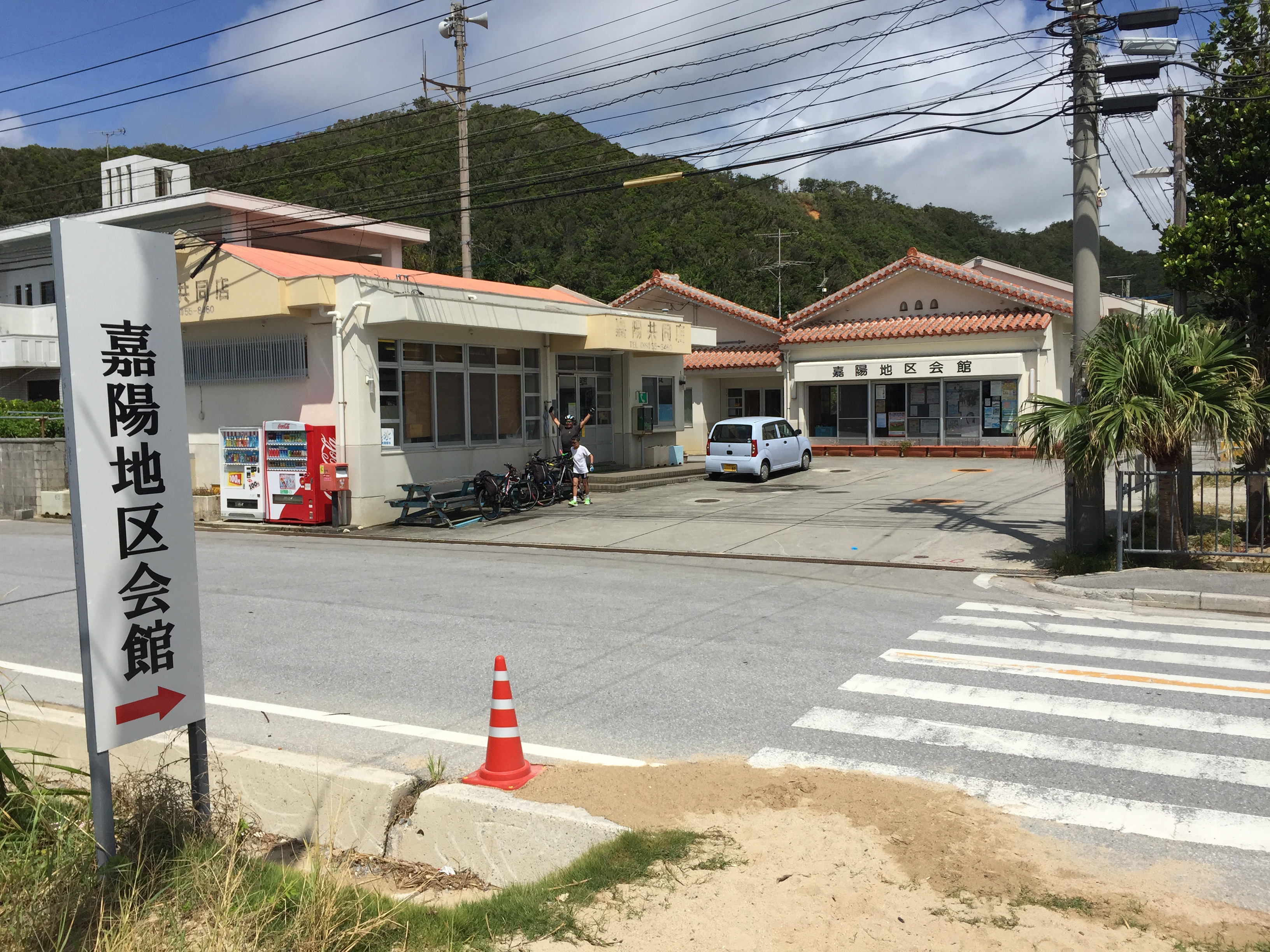
We had to take a slight detour since the coastal route was off-limits, but before long, we rolled into our first town of the day, Kayo.
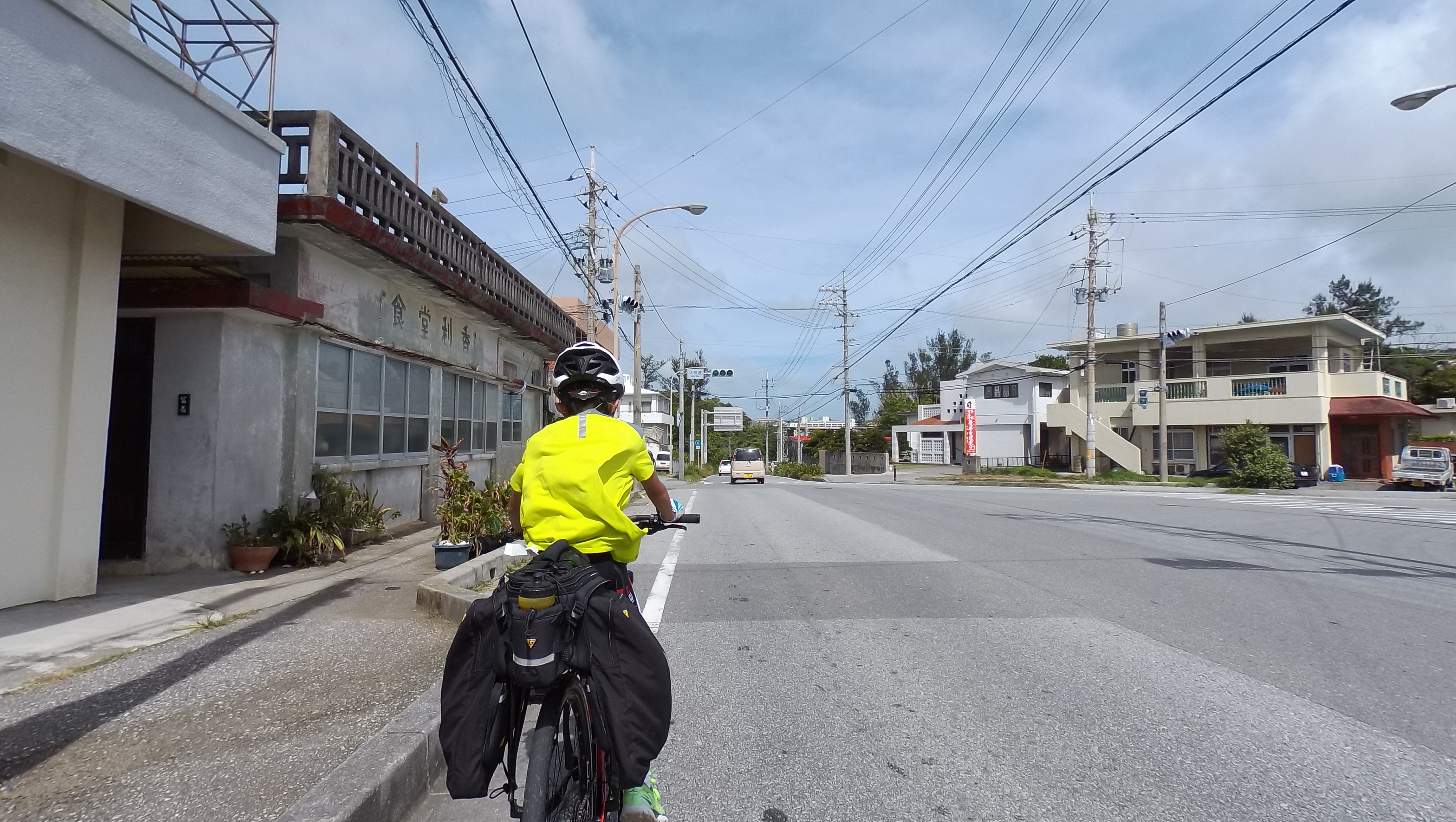
I used to find it hard to imagine a place in Japan without a convenience store. If you spend your trip in the cities, even smaller ones, it’s nearly impossible not to run into one every few minutes. But here in the countryside, it really hits you how isolated it can be. Slowly riding down a slope, we spotted a local supermarket tucked amidst the tropical jungle that surrounds the area. It was a much-welcome sight, seeing it there felt like a little slice of civilisation had appeared out of nowhere. A few locals were sitting outside, and I’d be lying if I said I didn’t desperately need some refreshments in that heat.
Throughout the entire trip, there was one thing that kept me going. No, not sheer willpower or determination, not even the promise of a good meal at the end of the ride. It was none other than Morinaga Energy-In Jelly.
Whenever you step into a convenience store in Japan, or even in Taiwan or Singapore, you’ll probably come across them. Lined up on the refrigerated shelf near the entrance, they look more like medicine than food, sitting amongst what appears to be a wall of pharmaceutical bottles. And in a way, they kind of are. Many of these drinks are made by pharmaceutical companies, but in reality, they’re just energy drinks in disguise, packaged to feel oddly clinical.
If it weren’t for these energy jelly packs, I don’t know how far I would’ve made it. Ever since discovering them on day one, they became my saviour, day after day. They’re not too filling, they taste good, and they genuinely give you a much-needed boost.
So even out in the far reaches of Okinawa, you can imagine just how delighted I was when I walked into that supermarket and found them on the shelf, right next to a box of limited-edition Coca-Cola bottles.
‘Hey, look! That’s our place for the night,’ Dad pointed out, gesturing ahead.
‘Really?’ I wasn’t sure if he was joking; it was only 3 p.m.
But, wait… why does it look like a ramen restaurant?
‘Dad? I thought you said it was a hostel.’
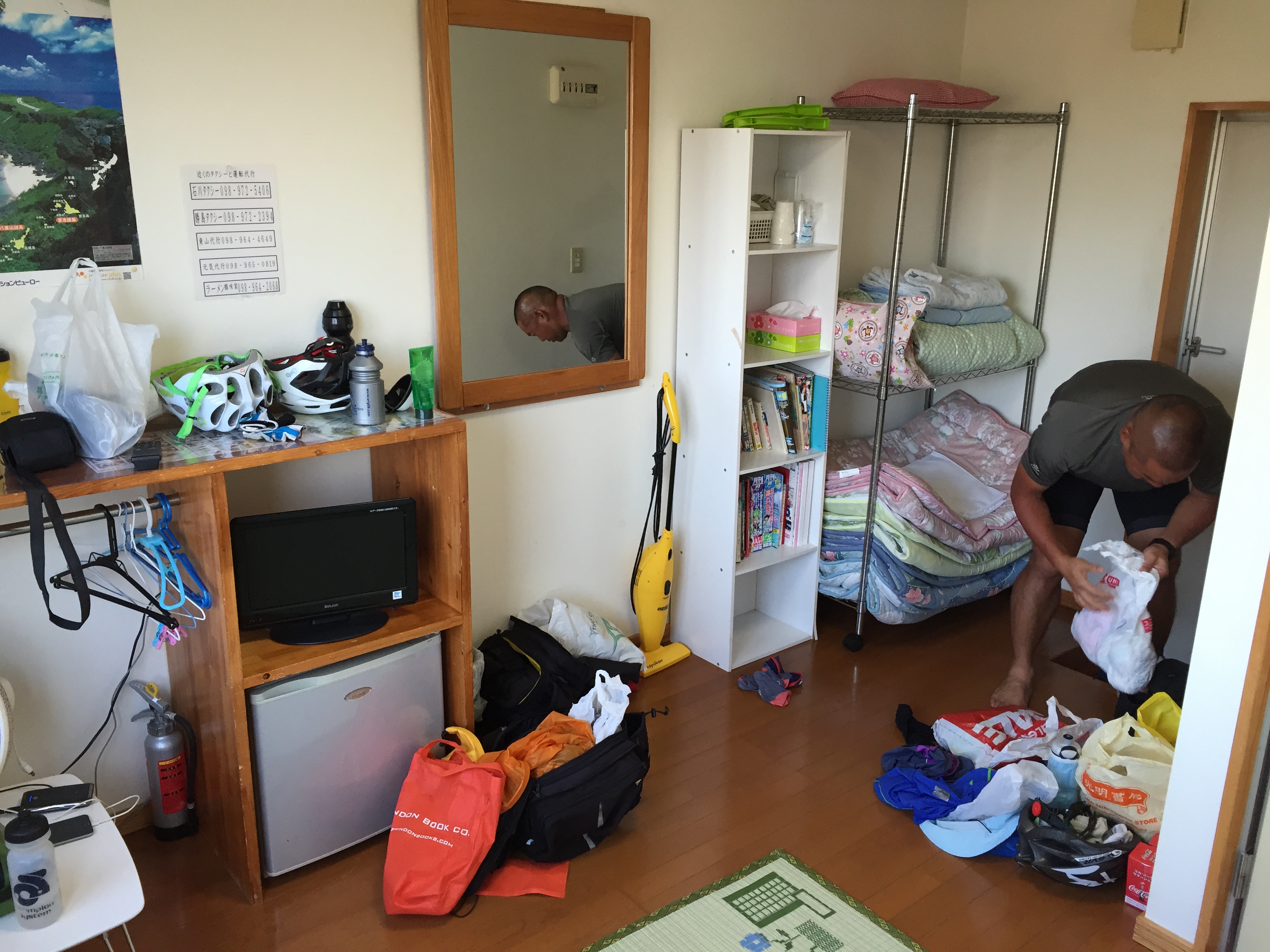
As we arrived at our accommodation for the day, I didn’t expect what awaited us as we stepped inside. The owner led us to a narrow staircase on the side of the building and took us up, revealing our room. It was, quite literally, the entire hostel, perched directly above the restaurant’s small dining area. If I’m being honest, it really felt like we were staying in someone’s bedroom, but not in a bad way. Despite how small the room was, it felt oddly cosy.
Realising it was still quite early, the three of us decided to take a stroll along the nearby beach. Before long, we came across a cafe with, once again, stunning views of the sea. Inside, there were a few locals and a handful of tourists. It even had a little corner selling antique trinkets.
‘This is nice,’ I murmured, letting the view sink in.
As the sun sank below the horizon, we stayed by the shore, savouring the moment just that little bit longer.
The Whale’s Tail
It was the penultimate day of the trip. Our destination, the town of Nishihara, was only about 30 kilometres away, but we had no intention of going straight there. Near the accommodation where we had stayed the night before, there was a bridge connecting the main island of Okinawa to four neighbouring islands, Henza, Miyagi, Ikei and Hamahiga. Known as the Road Through the Sea, this bridge is the longest over-the-sea road in East Asia.
‘Whoa, Dad, are we actually over the water?’ I gasped, staring out.
In many ways, it didn’t feel like crossing a bridge; it felt like we were still on the mainland, until suddenly we were in the middle of the sea, suspended between two land masses. It’s a strange feeling, not going to lie, especially how, halfway along the road, sits a small service station, complete with public toilets, shops, and an observation deck.
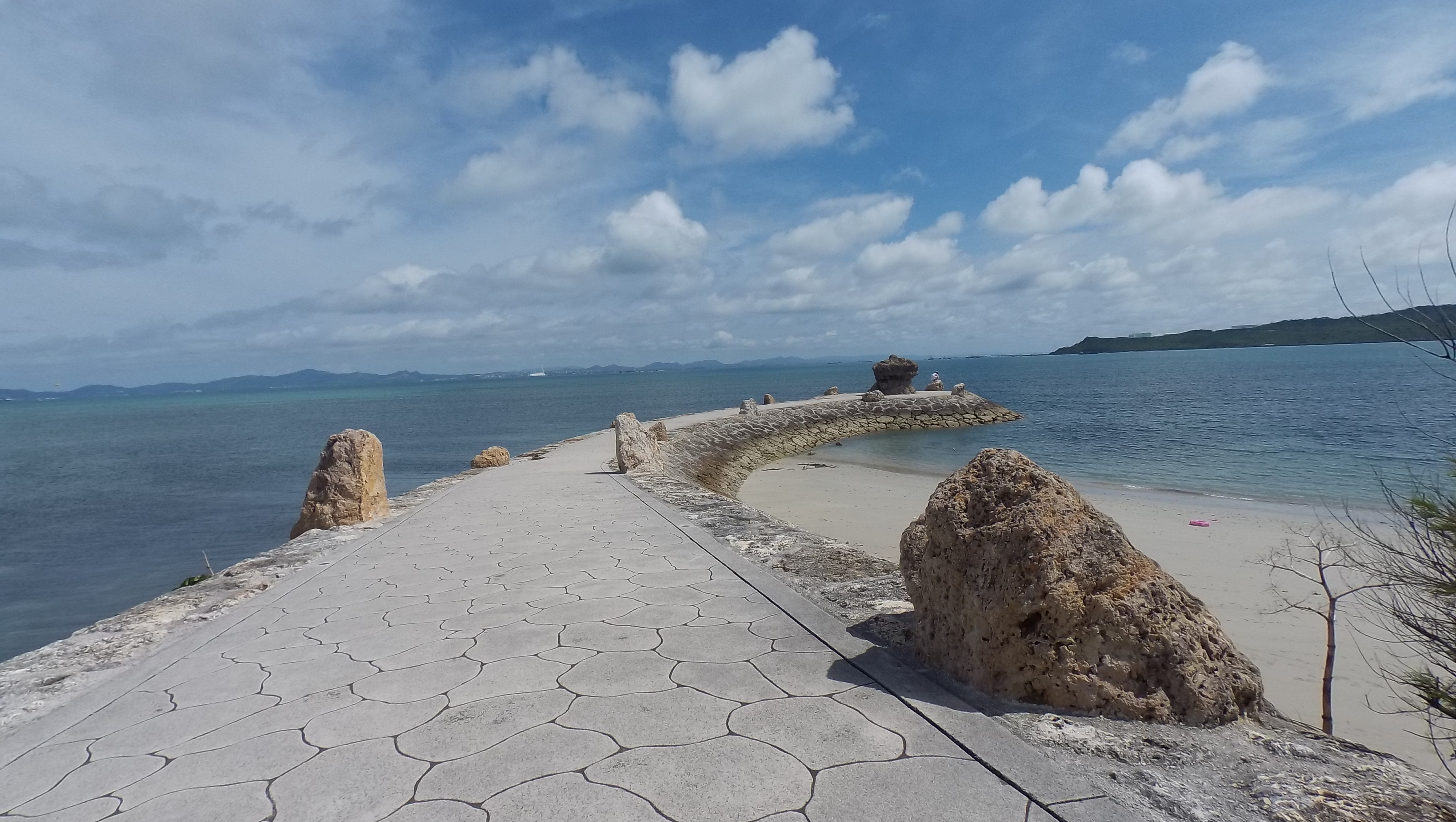
Walking along that long car park, we came to a little path leading out where a big rocky outcrop sits. This formation is known locally as the ‘Whale’s Tail’ because the shape of the rocks and the way the path runs out to it resemble a tail of a whale. It’s one of the more recognised photo spots along the Kaichu Road, and according to locals, its look changes with the tide, making each visit slightly different.
You’ll be glad to hear that the rock is still very much there today, and if I ever visit Okinawa again, you can be sure I’ll stop by once more. To me, it’s a reminder of how much we had accomplished in those short five days.
Much of Henza Island is taken up by oil storage tank farms operated by the Okinawa Oil Company, so large parts aren’t open to the public, but the small villages you do come across feel like a world away from the mainland, and that sense of escape only grows as you move onto the second island, Miyagi. Coming down a narrow street from the top of a rural street, you suddenly find yourself facing a vast rice field with the ocean stretching out in the distance. Having seagulls screeching overhead and the laughter of people on nearby beaches in the background, if there’s ever a moment that captures the essence of a Japanese summer countryside in ASMR, this would be it.
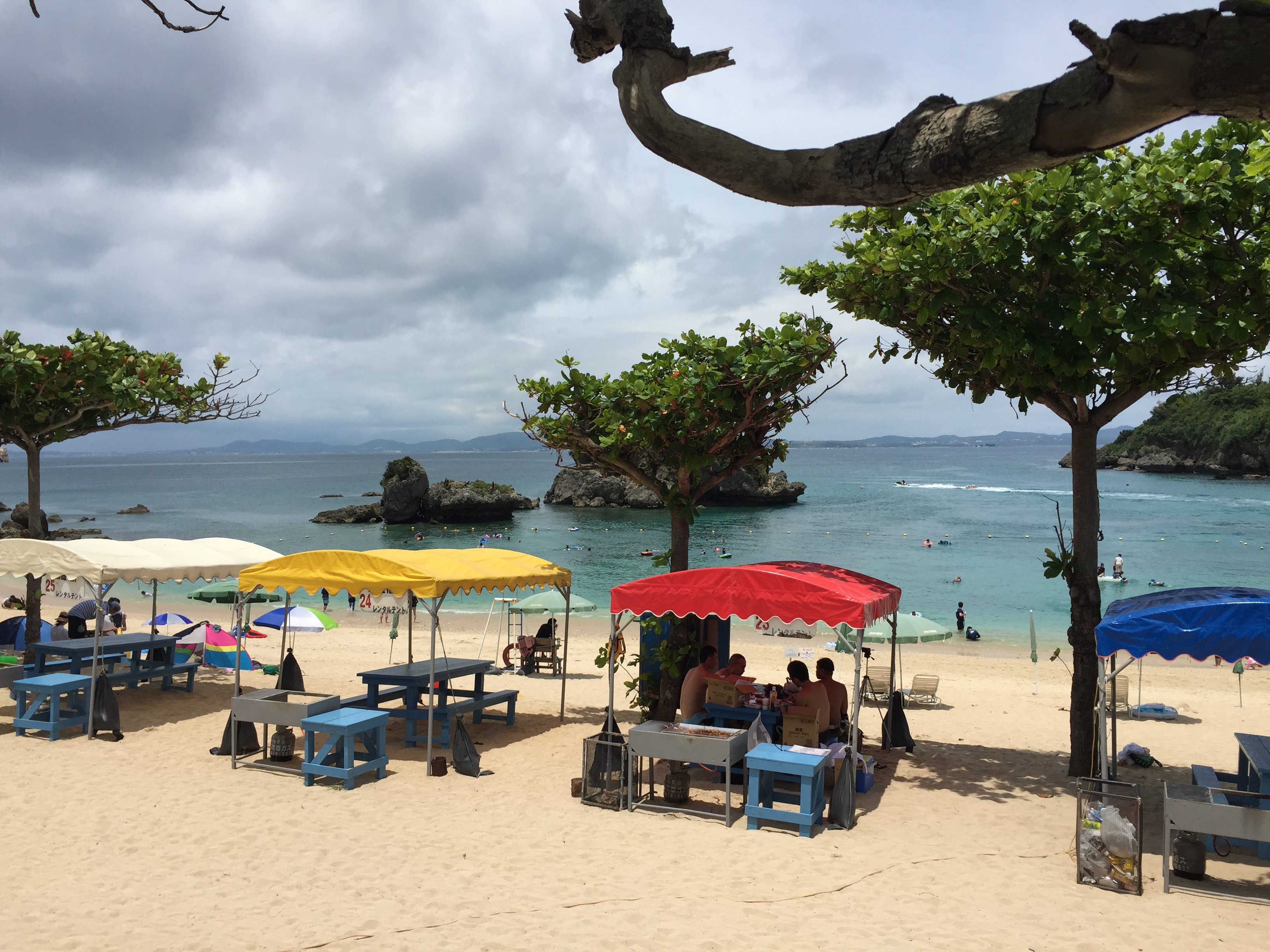
‘Dad? Can we, like, stay here forever?’ I asked, turning to him.
The three of us stopped at one of the beaches and bought ourselves a couple of drinks. The longer I spent on the island, the more I wanted to stay.
But, as with most things in life, it wasn’t meant to last. As we made our way back to the main island, the rest of the day was noticeably less exciting. Approaching southern Okinawa, the countryside slowly gave way to the city again, with traffic lights and busy roads replacing the open views. Tired as I was, though, I’d be lying if I said a small part of me wasn’t glad the journey was coming to an end.
The Way Home
‘Alright, you’ve got this. It’s the final day,’ I told myself, splashing water on my face and staring into the mirror.
Cycling across the city of Nanjo was undeniably interesting. It mostly felt like the places we’d visited before, but every so often, a street or landmark would catch you off guard and make you stop in awe.
By noon, we took a break at a small local shopping area, and I was once again reminded just how much trust people put in Japan, especially in the countryside.
‘Son, come check out these pineapples! They’re massive,’ Dad said, waving me over.
We came across a row of fruit and vegetable stalls, selling everything from radishes to massive pineapples, sitting out in the open, with nothing more than a tiny cash box beside the neatly arranged produce. In the UK, or even Hong Kong, such a stall would probably have been stripped bare in a fraction of a millisecond. Here, though, everything was carefully displayed, and people actually paid for what they took. There’s something about that level of trust that instantly puts your mind at ease.
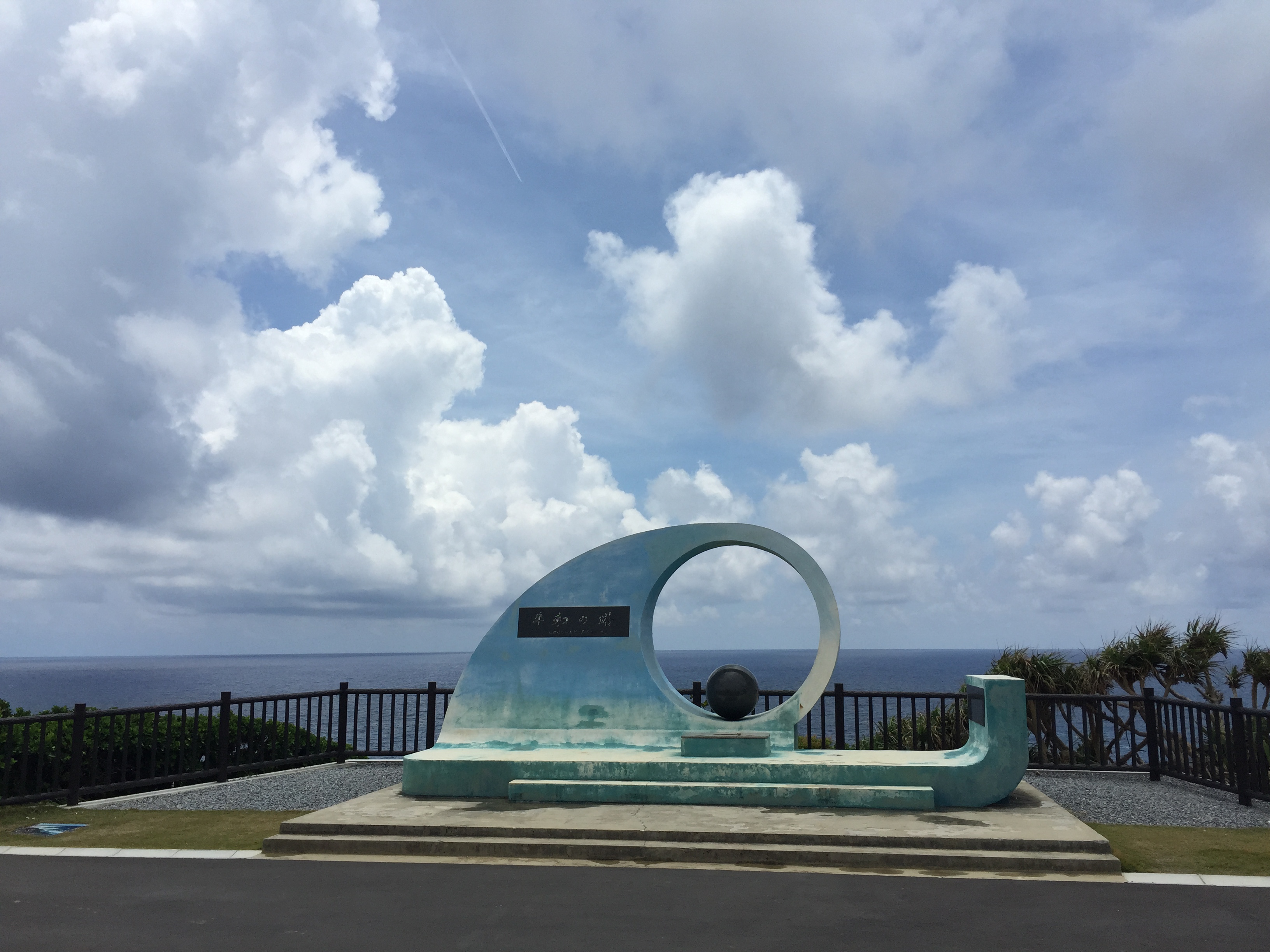
In time, we arrived at Cape Kyan, at the southern tip of Okinawa’s main island. The area around the cape was one of the last and fiercest battlefields of the Battle of Okinawa in 1945, where Japanese forces and civilians were pushed to the island’s southernmost reaches as the fighting intensified, and many residents lost their lives in those final weeks.
We set our bikes down as a couple parked their car next to the Peace Tower by the pavilion, part of the memorial grounds honouring the sacrifices and tragedies that unfolded here. It’s impossible to ignore the soul-stirring history of the place, yet even so, the panoramic view was, once again, breathtaking.
Hoping to beat the rush-hour traffic, we gave it everything we had and pedalled as fast as we could, aiming to reach our hotel before five. As we moved closer into the city, the streets started to look familiar, and I couldn’t help but recall the view from our first day, when we had landed and taken a taxi to the city centre.
‘Oh my god! That’s it, isn’t it!’ I shouted, probably earning a few disgusted glances from passing pedestrians. But as I made that final turn, there it was, our hotel. We had finally made it, completing six long days of cycling around the entire island of Okinawa. Victory never felt so good.
Dad quickly shut his cycling computer and gave Yuen and me a high five.
‘Well done, guys! How do you feel?’
‘Exhausted, but… I can’t believe we actually did it,’ I could barely catch my breath.
‘You looked like it was nothing today! Cycling that fast,’ Yuen joked.
More than completing the cycle, one of the things I remember most vividly from that day was dinner afterwards. A proper feast, no less. It wrapped up the trip and became a tiny, tangible memory of our adventure.
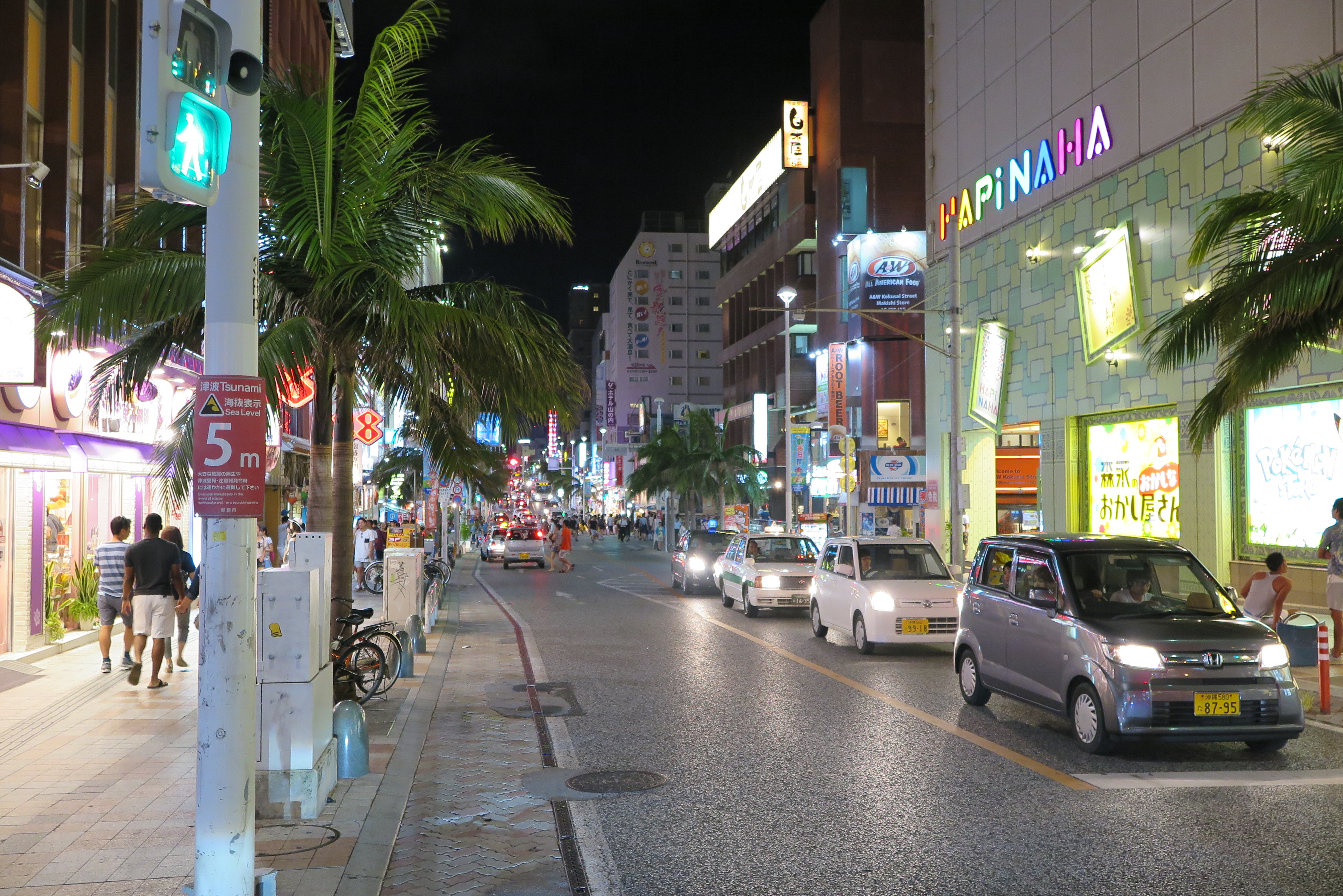
As Dad, Yuen, and I strolled down Kokusai Dori one last time, we stumbled across a restaurant offering tabehoudai, all you can eat, for 90 minutes. Without a second thought, we walked in and were led to the basement. Looking back, the lighting and vibe made it feel more like a dodgy nightclub than a restaurant, but whatever. We quickly ordered and tore into everything in sight.
‘Don’t eat these yet,’ Yuen warned, pointing to the appetisers the waiter had set down.
‘They give you these to fill you up so you’ll order less.’
‘Let’s save these for later. What do you want first? Salmon sushi?’
‘You know me!’ I grinned.
By the end of the night, I was certain we had eaten enough to fuel another six-day cycling trip… not that I had any intention to. It was the perfect way to close this chapter of our time in Japan.