Cycling… How Much?
‘I think I’d probably like to move somewhere near the Setouchi Inland Sea. Bizen is famous for its pottery, and the whole region has a quietly subtropical thing going on; it’s really pretty.
I was talking to a Japanese potter I met in North Yorkshire, who was in the process of planning her move back to Japan earlier last year.
It stuck with me, mostly because it crystallised something I already half-knew: Each region of Japan is practically its own world. There’s Hokkaido, which at times feels like Canada with its low houses and a sense of being a long way from anywhere. Tokyo, obviously, is one of the largest cities in the world. And then there’s southern Japan, Okinawa, in particular, which in many ways is Japan’s answer to a subtropical paradise.
One night over dinner back in early 2015, Dad dropped one of his classic ‘why not?’ ideas. Instead of our usual mountaineering expeditions, this summer we’d be tackling a multi-day cycling trip. Because, apparently, climbing 3,000-metre mountains wasn’t quite adventurous enough.
I was sceptical at first. I hadn’t ridden more than 50 kilometres in one go, and his plan of cycling 80-plus kilometres a day sounded, at best, wildly optimistic and, at worst, completely unhinged. But as he started tempting me with the delicious seafood and scenic beaches, I mean, who could say no?
The International Street
Leaving Naha Airport and heading into the city, I vividly remember just how different Okinawa felt compared to the rest of Japan. There were Japanese teenagers skating along the streets; some had just returned from surfing trips and were still carrying their boards, and others were sipping drinks outside tiny stalls. The whole atmosphere was far more laid-back, and the people, too, generally seemed more relaxed.
Okinawa was once part of the Ryukyu Kingdom, a prosperous trading hub connecting Southeast Asia, before being gradually absorbed into Japan in the late nineteenth century. And even today, it retains its own native language and distinctive dialect.
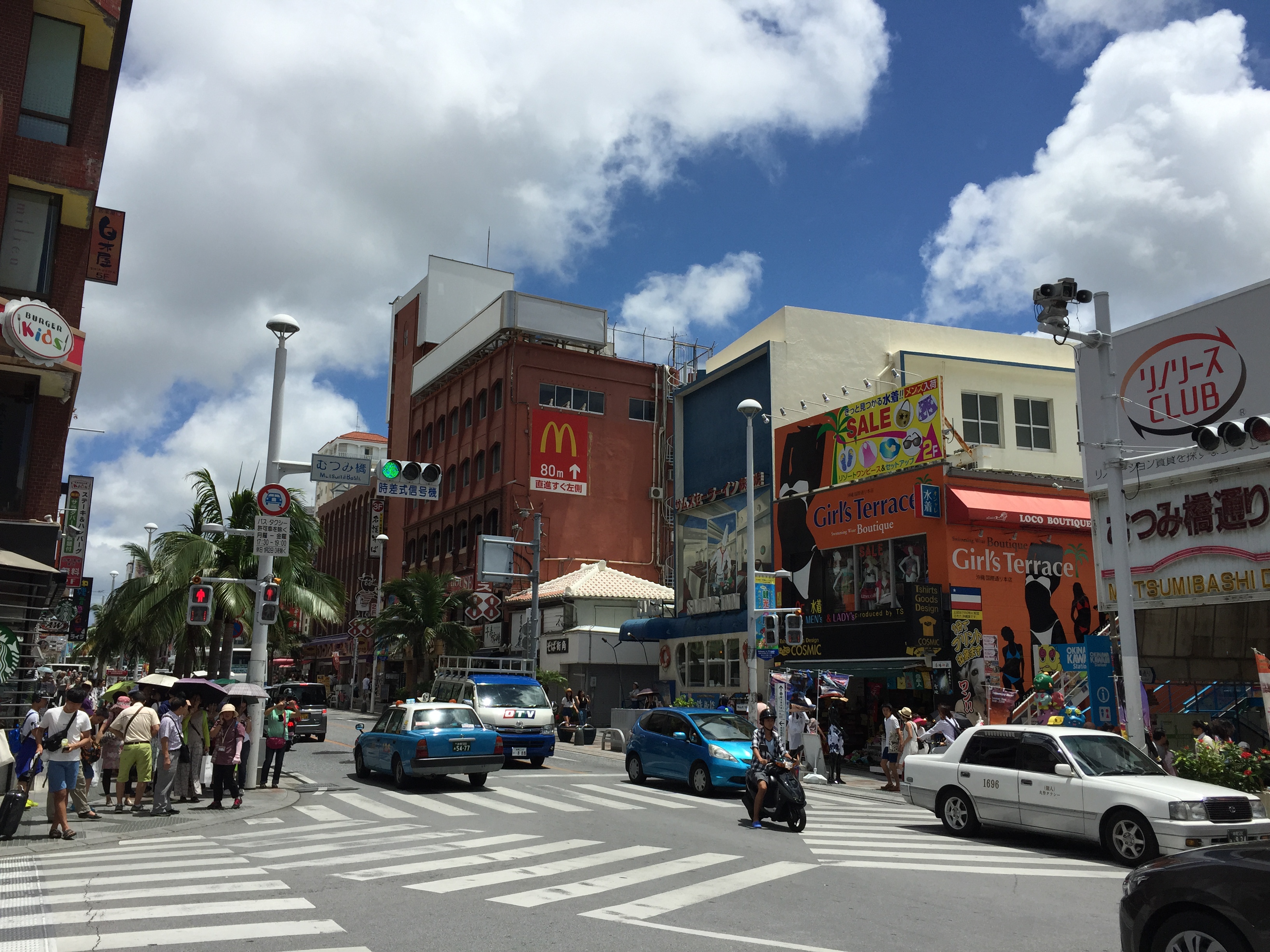
Walking through downtown, you might be struck by just how many Americans there are. This is largely because around 75% of the U.S. military presence in Japan is concentrated in Okinawa, owing largely to its strategic importance for regional defence. For such a small island, it’s surprisingly dense with cultural and historical significance.
Perhaps the most famous street in Naha, Kokusai Dori, literally International Street, is one that every traveller ends up visiting. Joining us on the trip was Yuen, a good friend of Dad’s and a PE teacher himself. We definitely let ourselves get a little carried away wandering through the colourful souvenir shops and bustling restaurants along the street.
‘Whoa… what’s that?’ I murmured.
Looking for a place to sit down, I caught sight of an Okinawan classic, Blue Seal. The ice cream chain was established in 1948 for U.S. soldiers after the war and later opened to locals, eventually becoming something of an icon known for unique flavours like Salt Cookie.
While there’s no denying it’s tasty, having tried it a few times, I have to admit, it doesn’t quite live up to the hype (not much better than what you’d get at Baskin-Robbins, in my opinion), but hey, you can’t argue with its novelty appeal.
Despite the street’s electric atmosphere at night, with our adventure starting the next day, the three of us decided it probably wasn’t wise to stay out too late. After a quick but satisfying plate of Katsu curry rice, we headed back to our hotel room, gearing up for the big push tomorrow.
The Lady with a Mango and Some Snickers Bars
Our plan for the first day was to cycle north to the city of Nago. Despite the distance, I’d be lying if I said I wasn’t excited, after all, it was my first time cycling abroad. To commemorate the occasion, prior to the trip, I made a little banner labelled The Okinawa Bike Challenge. I had it laminated and told Dad I’d take it out for a photo at every checkpoint we reached along the way.
Unfortunately, as you probably might have guessed, things didn’t exactly go according to plan. Just 20 km in, and all that initial excitement had quickly turned into pain and misery.
‘Dad! Wait up!’ I shouted, but he had long since ridden ahead.
I pedalled with everything I had, but somehow, I wasn’t getting anywhere.
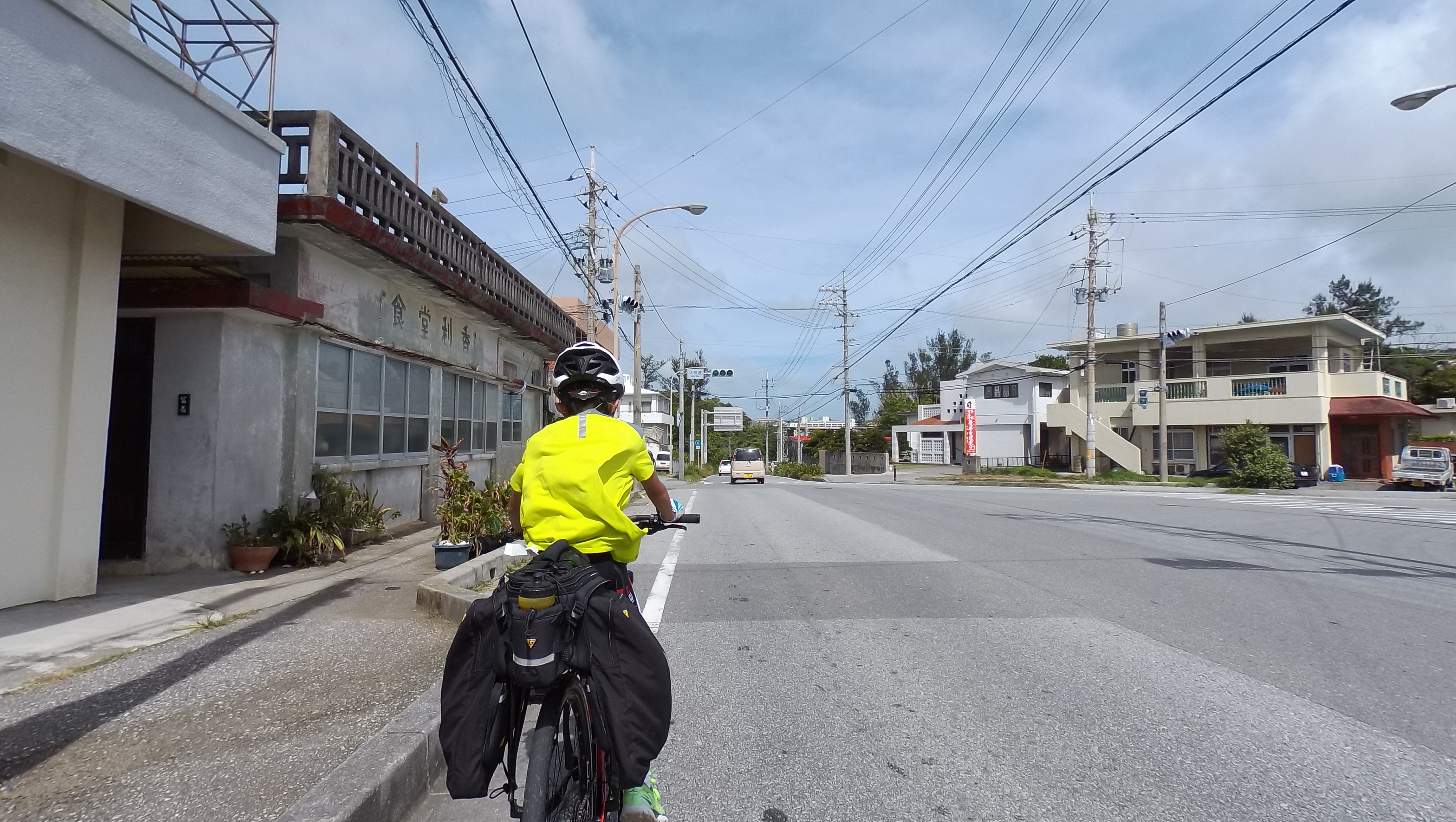
To every bikepacker or cyclist, in general, headwinds are probably one of the most infuriating yet unavoidable parts of any cycling trip. We’ve all experienced it: pedalling as hard as you can, only to feel the wind pushing you backwards. As a naive 11-year-old at the time, I had no idea just how brutal a 40 mph headwind would be.
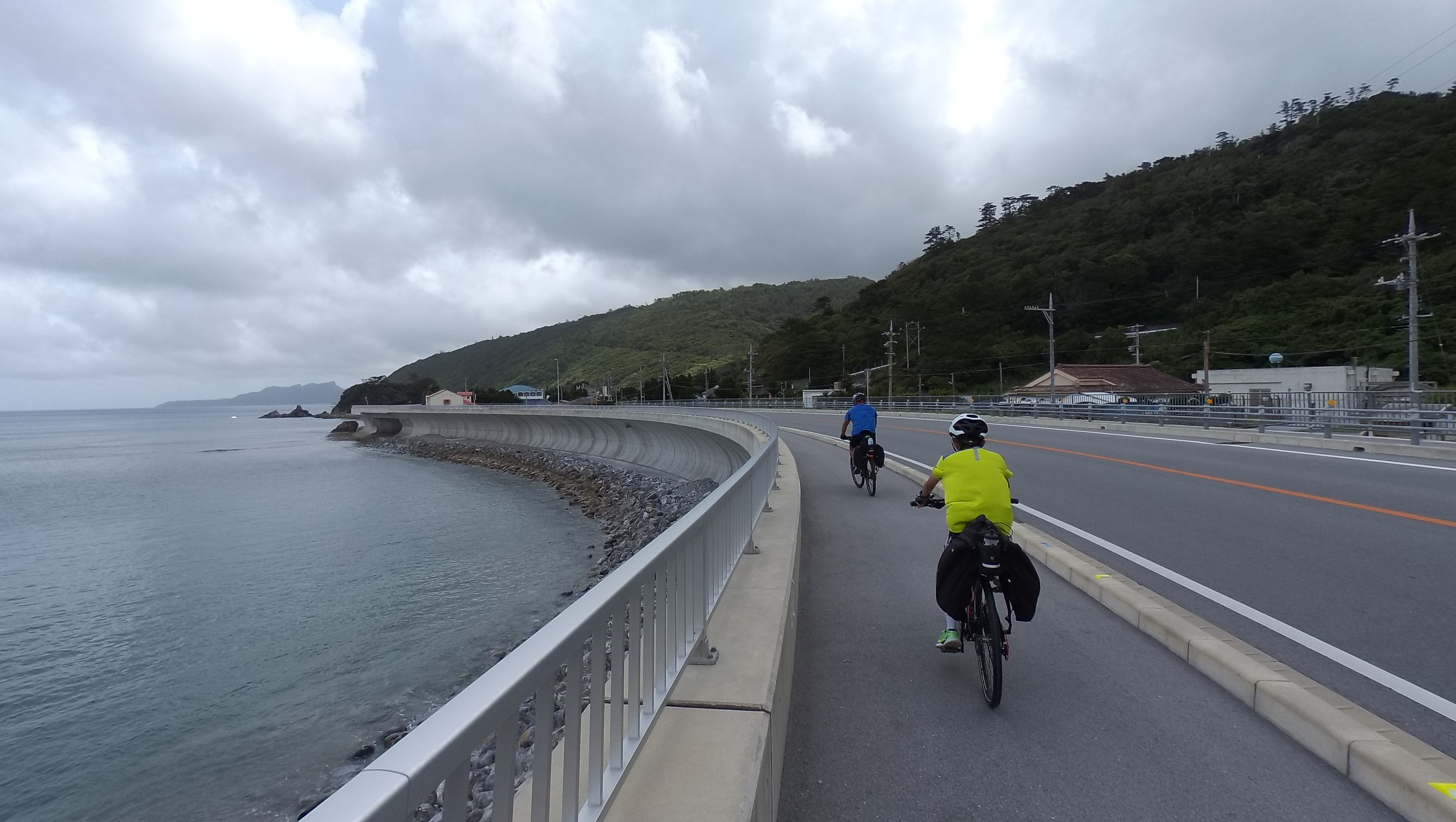
By close to noon, we were approaching the Yomitan Peninsula, cycling along the coastline. Looking back at the photos now, it fills me with nothing but nostalgia. With the sea on one side and idyllic farmlands and houses on the other, if it weren’t for the countless typhoons that hit Okinawa every year, you wouldn’t have to try very hard to convince me to move there.
At the time, though? Even having reached our checkpoint of the day, Cape Zanpa, and cycled more than halfway to our destination, not even a tasty lunch at a local cafe could fix how utterly wrecked I was.
But, to be fair, I think I spent more time trying to make sense of the English menu than actually eating.
In a place where English is pretty much taught as an afterthought, it’s no surprise that most people outside the main cities don’t speak a word. Still, you’ve got to give them credit for trying. Menu items like ‘Creamy Surprise,’ ‘Deluxe Lunch Curse,’ and my personal favourite, ‘Testy Food With Your Mother,’ were truly something else.
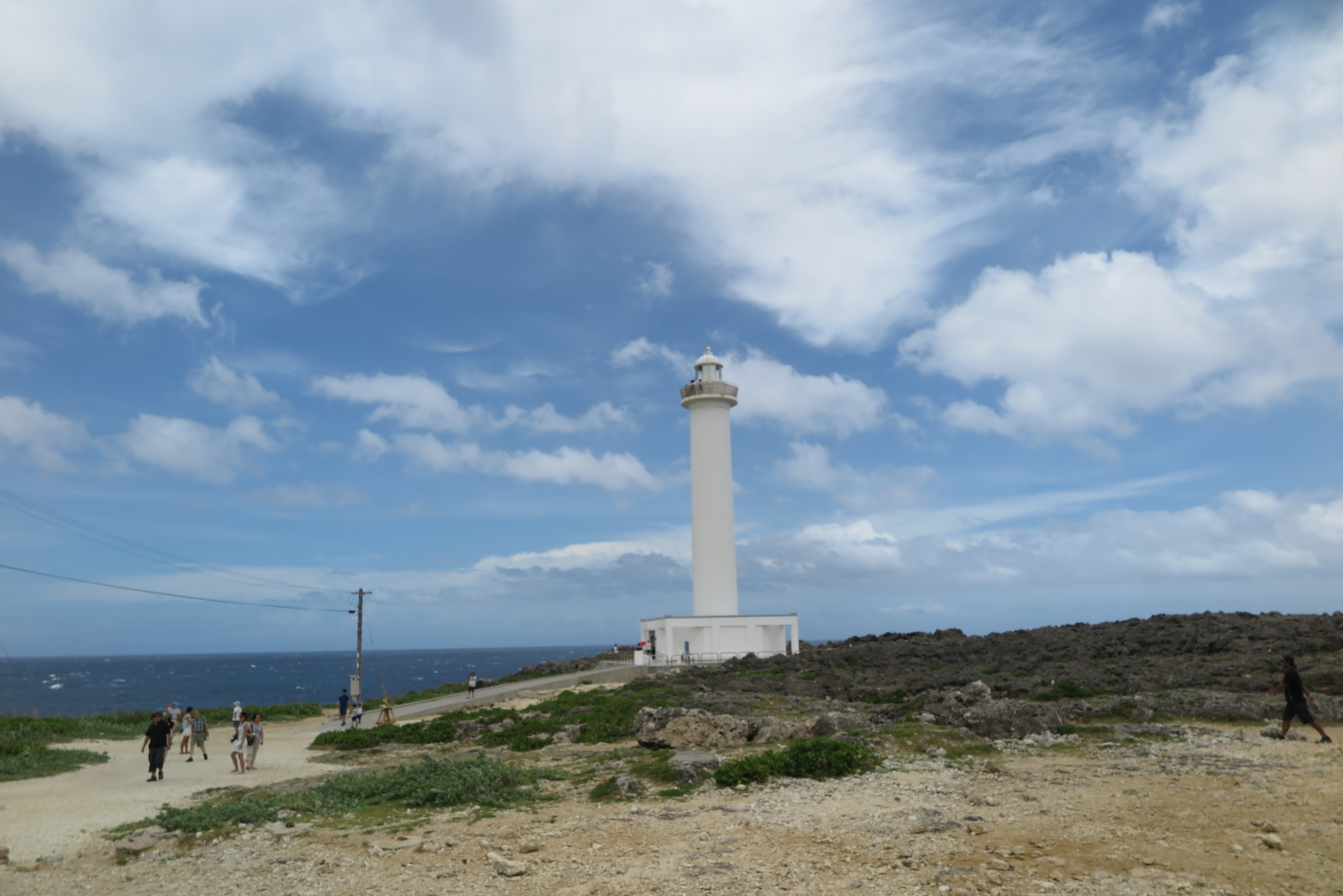
‘Son! Look over there! See that pier? We’re getting close!’ Dad called out, pointing toward a bay in the distance, dramatically illuminated by a ray of sunlight.
Just under 30 km to go. I probably wouldn’t have felt so defeated if I’d known what was coming. The entire afternoon was basically a cruel mix of flat stretches, followed by a relentless series of ‘bumps’, 30 metres up, 30 metres down, repeated nearly ten times. And with the wind constantly battling us at every turn, each of those little climbs felt like hauling ourselves over a towering sand dune.
By sunset, I was at my wits’ end. This was only the first day, and it was starting to make Mount Fuji feel like a walk in the park!
‘Sorry… I just need a minute,’ I sighed, on the verge of tears.
As I stopped by the side of the road, a voice suddenly called out to me. No, it wasn’t Jesus.
‘Sumimasen! Excuse me!’ A woman in her fifties came dashing from the other side of the street.
‘Shit, did we do something wrong?’ I muttered.
‘Doko ikimasuka? Where are you off to?’ she asked.
‘We’re staying in Nago tonight,’ Dad replied.
‘Etto… Chotto matte kudasai! Please wait a moment.’
The woman suddenly turned and walked back into her tiny shop. Dad and I exchanged a glance, wondering what the hell we had gotten ourselves into. But just a few minutes later, she reemerged, holding a giant mango and a couple of Snickers bars.
‘Kore tabette! Please take these,’ she said, pressing them into my hands.
While I’ve heard stories in Japan where people tried to recruit foreigners into their cults, thankfully, that wasn’t the case here; she was just trying to cheer us on.
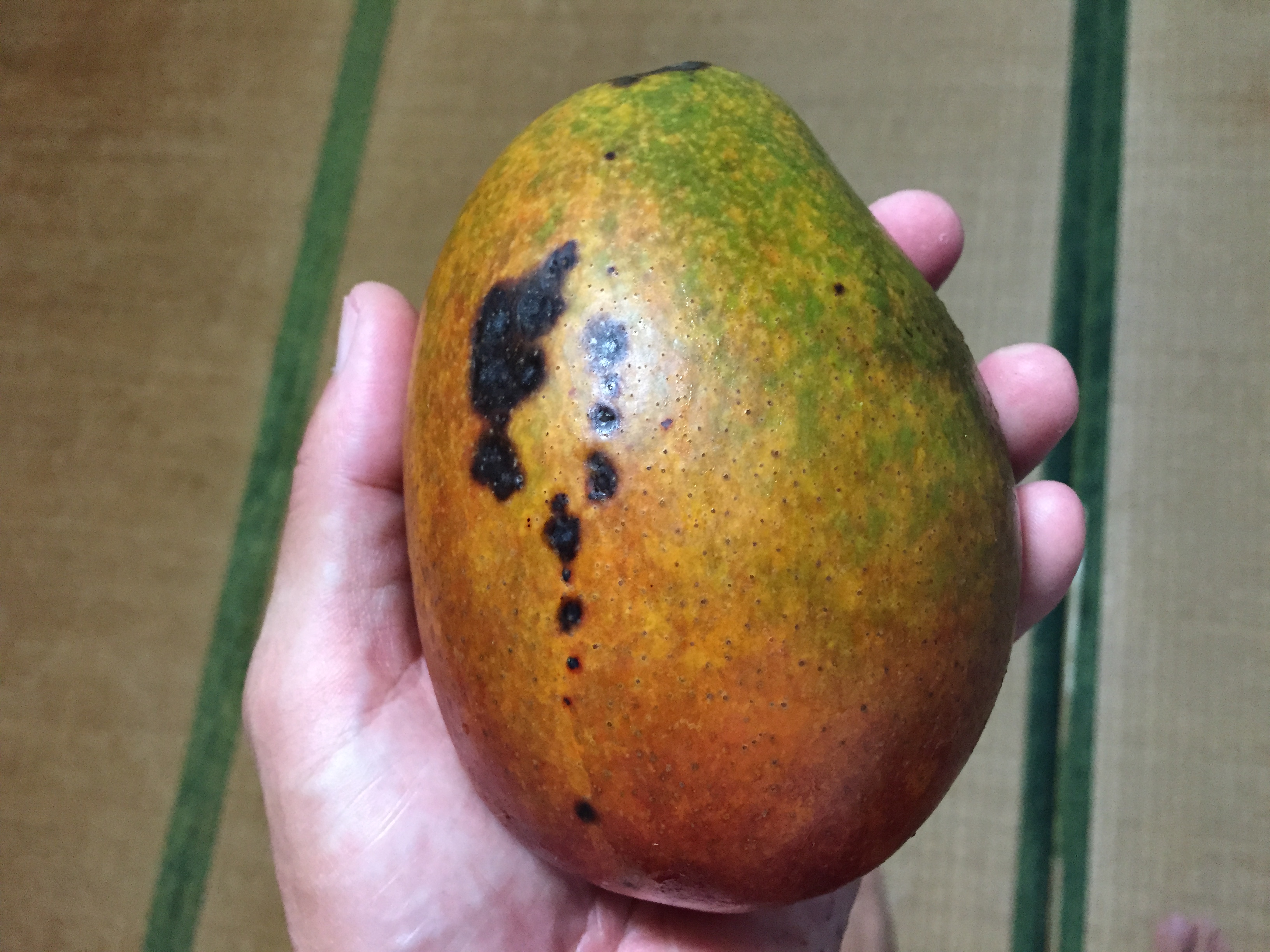
To this day, it remains one of my favourite memories of the entire trip, and it fills me up with warmth every time I think back on it. It’s such a random act of kindness.
I’ll likely never meet that woman again, but I’m glad we shared that brief exchange one afternoon over ten years ago. In hindsight, I don’t think I would have made it through that day if it weren’t for her.
Air Conditioning… for 100 Yen?
They say a ‘healthy’ tan is supposed to develop over weeks, with short, sensible sun exposure each time.
Yeah, right. Didn’t happen for me.
After being roasted like Icarus on yesterday’s ride, I managed to soak up a full year’s worth of sun in a single day. Unsurprisingly, a bottle of aloe vera gel became my inseparable companion for the rest of the trip.
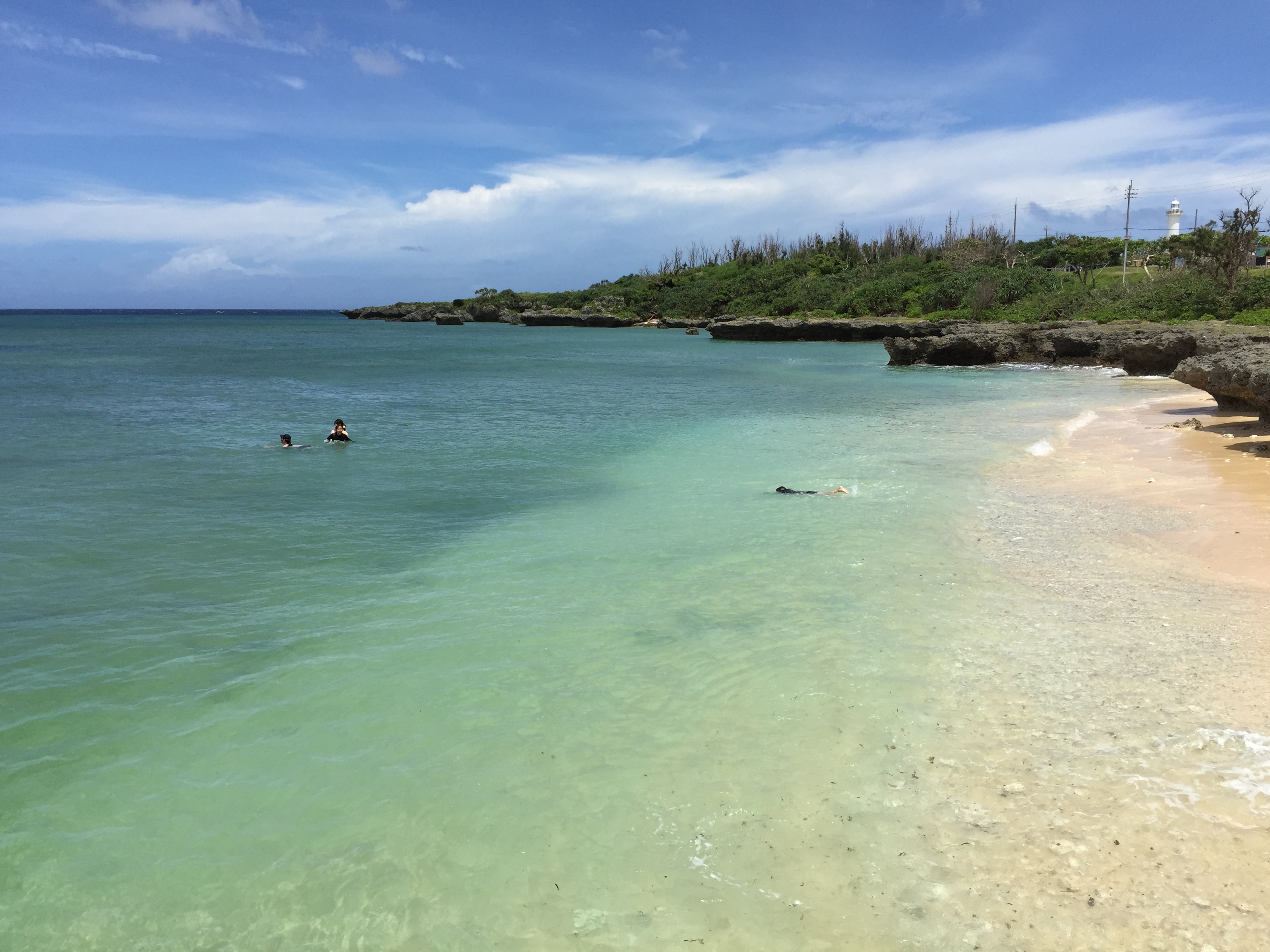
Regardless, I thoroughly enjoyed our morning ride across the Motobu Peninsula, even with my sore legs protesting the whole way. The beaches we stumbled upon were absolutely gorgeous and offered the perfect escape from the heat. Sliding my feet into the water, that smooth, icy-cold shock. ‘Pure heaven,’ if you ask me.
No sooner had we rolled into the next town than a giant sign loomed overhead: Churaumi Aquarium - turn left.
In all my years of travelling through Japan, I’ve never known anyone to visit Okinawa without making a stop here. Famous for its enormous ‘Kuroshio Sea’ tank, it’s one of the world’s largest aquariums, home to whale sharks and a dazzling array of marine life from Okinawa’s vibrant underwater world. While we hadn’t originally planned to stop, it was too tempting to pass up.
The first thing I did was try one of those coin-pressing machines at the entrance. I slipped in a 500 yen coin and came away with a little keepsake stamped with ‘Bob Tsang Bike Challenge 2015’. It ended up being one of the few souvenirs I picked up on the trip, but it’s one that became a tiny, tangible memory of our adventure.
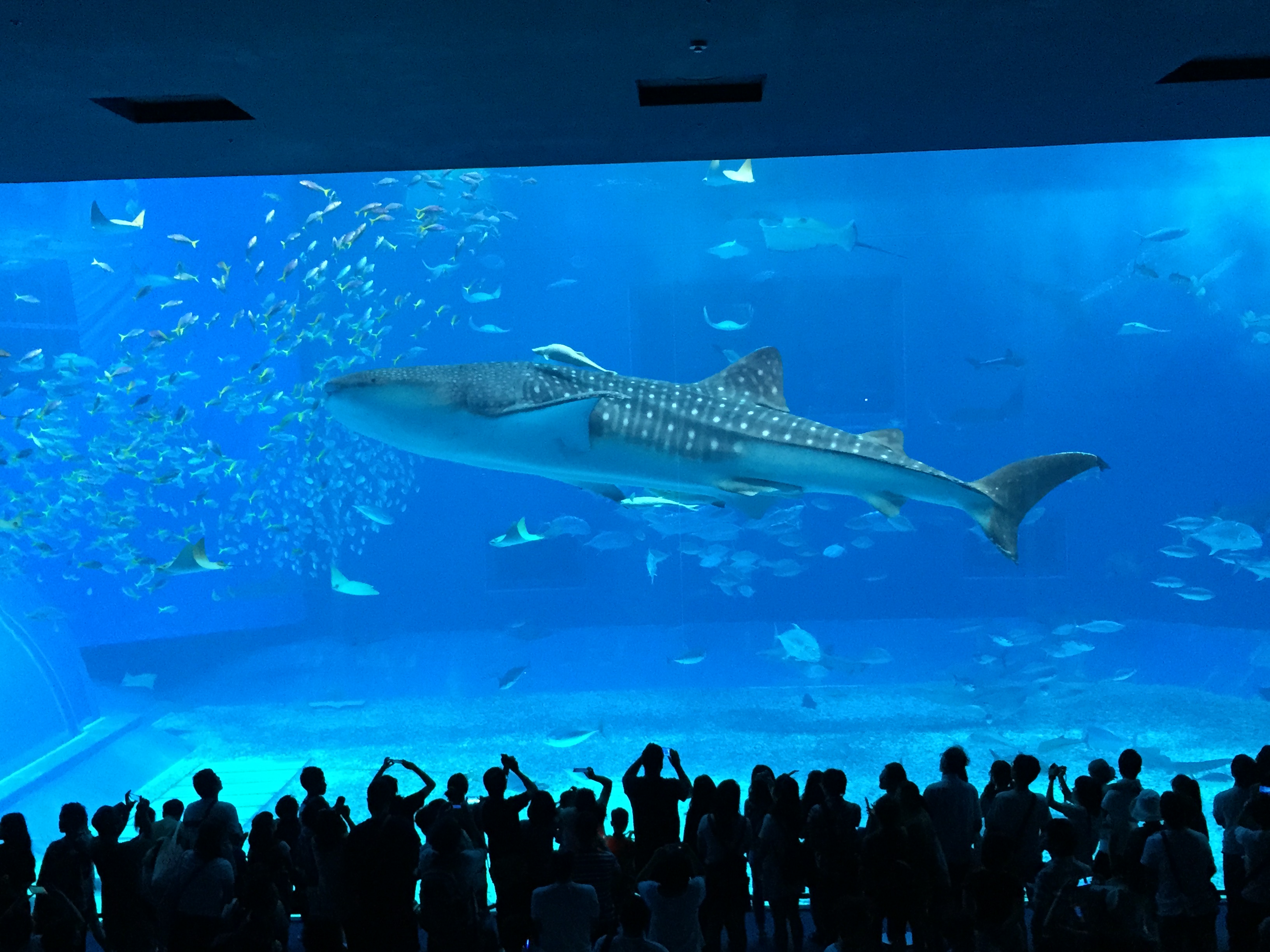
‘Oh my…’ I gasp, staring up at the towering 10-meter tank before me.
‘It really is something,’ Yuen remarked, clearly impressed.
The main exhibit, featuring Jinta the whale shark, was an absolute spectacle. I suppose I could go on and on about how incredible it was and how massive the entire place felt (I mean, the aquarium itself is just a small part of the whole park), but really, it’s something you have to experience in person to fully appreciate.
Unfortunately, having spent a whopping three hours at the aquarium, much of the afternoon was a game of catch-up. Leaving Nakijin village behind, Dad proposed heading to Yagaji Island as a shortcut.
‘Trust me! We just need to cross this bridge up ahead,’ Dad reassured us.
One thing I find fascinating about Okinawa is just how many of its neighbouring islands are connected by bridges. We often think of Okinawa as a single island, but beyond the Ishigaki Islands farther south, over 20 smaller islands are linked to the main Okinawa Island by bridges alone.
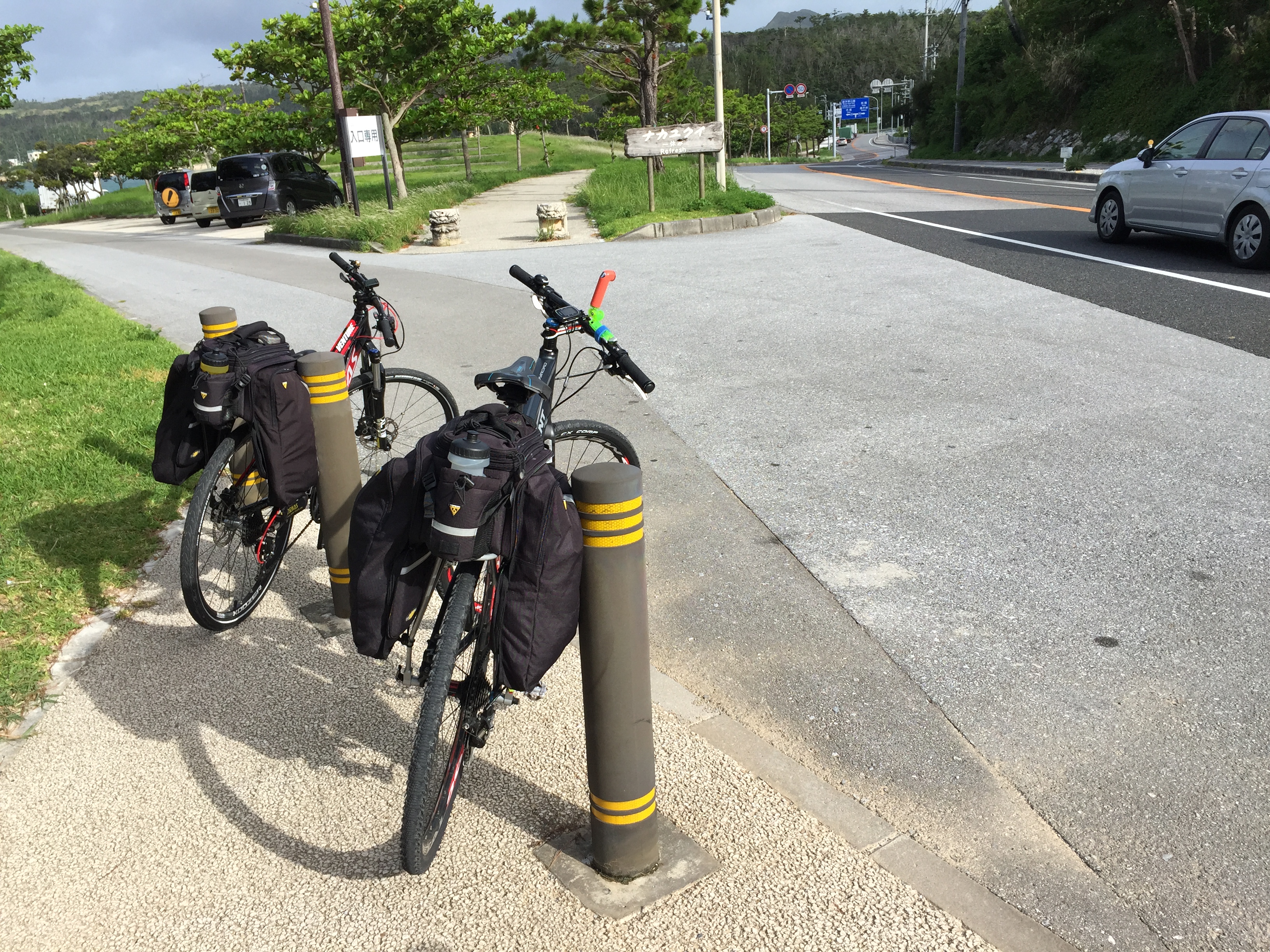
‘Hello? Is there anyone?’ Dad called out.
By 7 p.m., we had finally arrived at our hostel for the night, nearly two hours later than planned. It sat in the middle of a tiny village. Beautiful? Absolutely. Even in the blue hour, the way the lush grass caught the fading light gave the whole place an almost ethereal vibe. But there wasn’t a single soul in sight.
We stepped inside. The lights were on, so why was no one there?
Out came one of the owners, looking slightly confused.
‘John-san, desu ka? Are you John?’ he asked.
‘Yes! We have a booking for tonight.’
Suddenly, his face lit up.
‘Oh! We thought you weren’t coming! Haha! Welcome! Douzo! Come in!’
To our pleasant surprise, there was no one else staying that night. Despite the size of the place, we had it entirely to ourselves.
As we headed to our rooms, something caught my eye: a cute little coin box with a label next to the AC remote. ‘Air conditioning: 100 yen/ four hours.’ Bet you don’t see that every day.
While some people might bristle at the idea, in fairness, it made sense; the rooms were already comfortably cool, and considering how inexpensive the place was, charging 100 yen to save a little energy didn’t seem out of place.
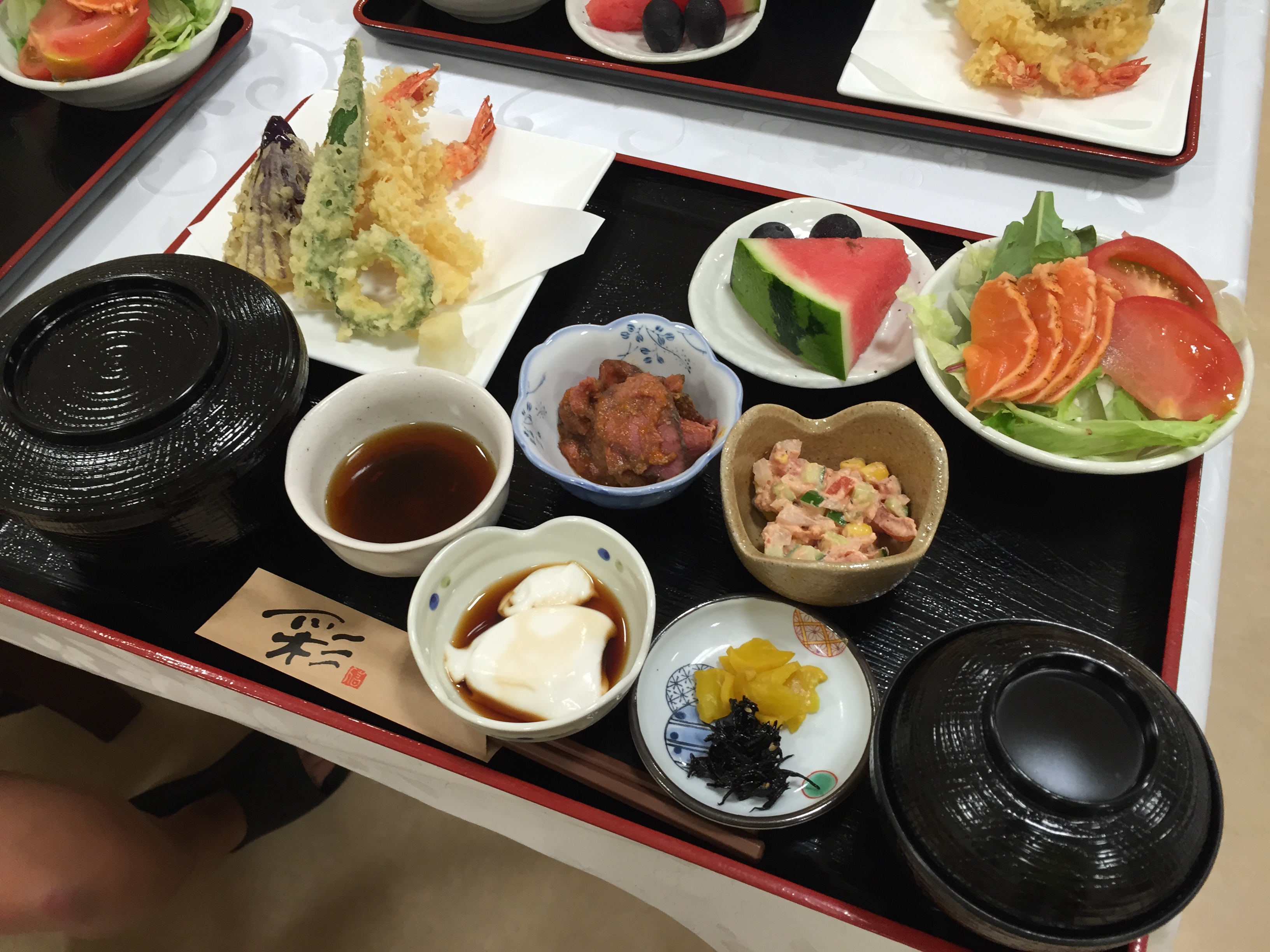
What really shocked us, though, was the dinner. I don’t know if the owners were feeling generous or just had plenty to spare that evening, but my god, it was a feast. Every item was meticulously presented in front of us.
‘If you need more rice, let me know. Free refill,’ the owner smiled.
‘Jesus… It’s a miracle nobody comes here. This place is amazing!’ I thought to myself.
And with that, our second day came to a close, wrapping up another chapter in one of the most fascinating regions I’ve visited in Japan.
TO BE CONTINUED…