The Calm Before The Storm
Do you know it’s actually possible to climb Mount Fuji in the winter?
Despite the local government’s repeated insistence that Mount Fuji should only be climbed during the official climbing season, every year, dozens of climbers, mostly Japanese, still take it on anyway, often treating it as something of a personal training ground for more ambitious expeditions abroad, including Mount Everest. I remember first hearing that and thinking, ‘Who would be stupid enough to climb such a dangerous mountain with almost no chance of rescue?’ Well, that’s exactly what we did back in 2016.
Having completed several winter expeditions in Japan by that time, I sought to challenge myself with higher and more demanding climbs. It was then that my father proposed the idea of returning to Mount Fuji to attempt a winter ascent.
‘What do you say, son?’
With the limited information I had — essentially just the promise that ‘it won’t be that bad’ — I decided to go along with it. What could possibly go wrong?
And so, after just a few months of training, I found myself in a small hostel in Karuizawa, meeting a pair of unusually enthusiastic owners, both of whom seemed genuinely shocked and eager to hear more about our upcoming climb.
Like before, Dad had a few mates joining us on the climb. This time around, we were joined by Vanessa, Kevin Cheng, and Kelvin Claus, all good friends of ours, with the latter having met Dad during his climb of Mount Aconcagua back in 2003.
As I entered my room, I was greeted by a cosy view of the snowy forest outside. Pressing my ear towards the window, I could hear the trees swaying in the wind as the snow fell quietly. Looking back, it’s one of those childhood memories that reminds you of a time when the days seemed just that little brighter, the skies were clearer, and every step felt lighter.
Suddenly, my mind drifted away to thinking about the future ahead of me. In a few months’ time, I’ll be in secondary school, wearing a new uniform with new classmates.
‘Hmm, secondary school life… After that, it’ll be university, but that’s something I can hardly even imagine,’ I thought to myself. ‘These mountain expeditions don’t exactly help my grades or improve my social life, so what am I even doing this for?’
The thought would continue to linger in my mind in the days to come.
Second Time’s The Charm?
‘Take care! See you in three days!’ Mum called, waving as she and my two aunts headed off for a weekend of onsen, sushi, and pure luxury, leaving us behind to suffer on the mountain. How wonderful.
With the road up to Station 5, the usual starting point of the Yoshida Trail, closed during the winter months, we had no choice but to begin from the very start of the trail at Umagaeshi.
Having finished our breakfast and fueled our stomachs, we set off. And, true to form, things started going wrong before we had even set foot on the trail.
CRUNCH!
‘Uh… did our car just try to eat the snow?’ I muttered, half-panicked.
It turns out our little rental car had decided to stage a dramatic performance and got itself hopelessly stuck in the snow on the road to the trailhead. In less than an hour, I’d gone from enjoying a nice, peaceful meal at a Gusto to being half-buried in snow, frantically digging at the tyres whilst praying I wouldn’t end up on the news headline.
‘Come on, fellas! Give it everything you’ve got!’ Dad exclaimed.
While part of me was still holding onto the hope that we could drive on once the car was freed, it soon became clear that the snow had other plans, and that we had to hoof it an extra four kilometres on foot.
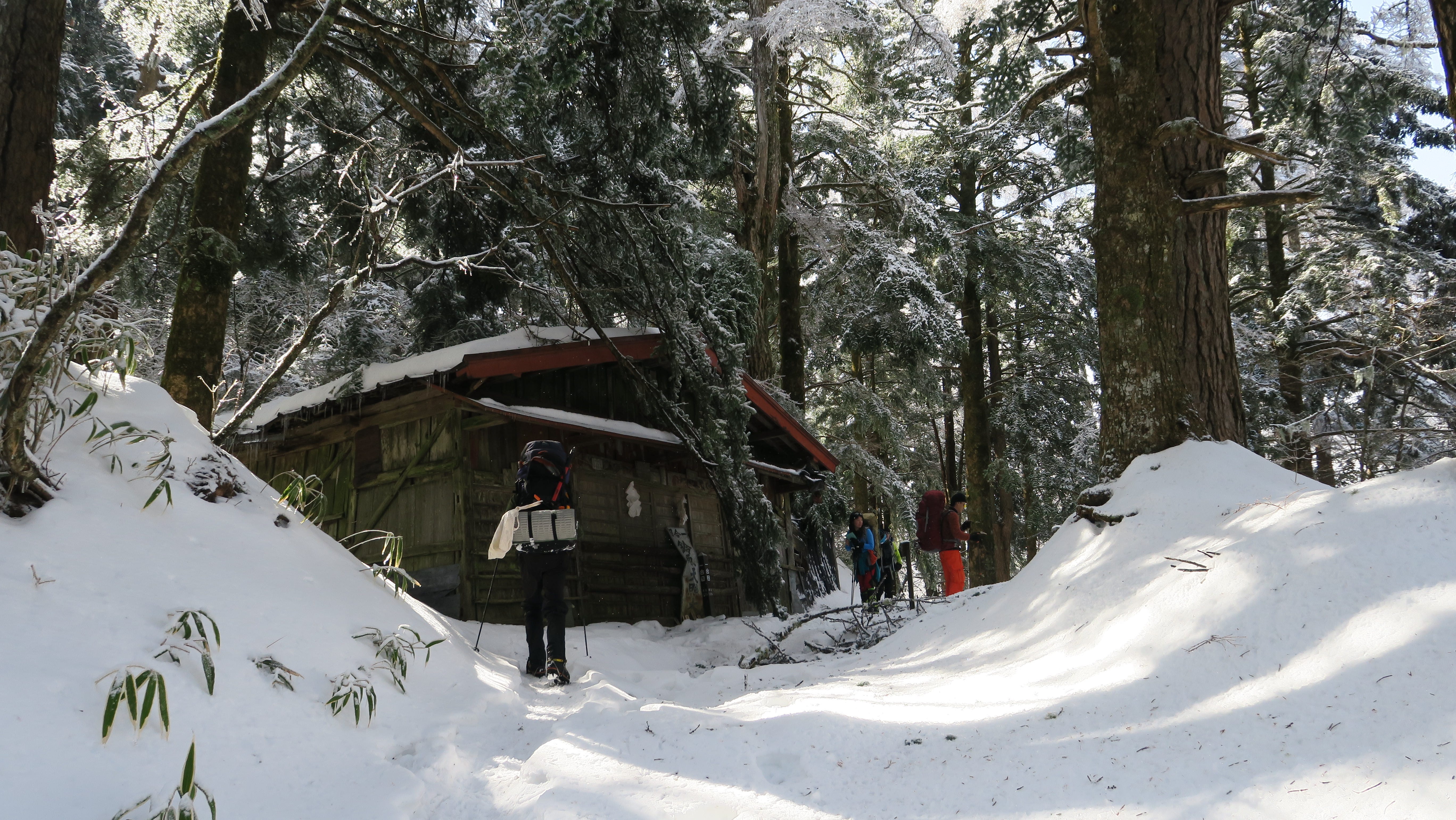
It was 12:30 p.m. Arriving at Umagaeshi, I continued to pester Dad about how much farther we had to go, as if asking would somehow make it shorter.
‘Is it six kilometres? Five?’
‘Probably around five,’ Dad replied nonchalantly.
Sitting at 1,400 metres above sea level, Umagaeshi marks the entrance to the sacred area of Mount Fuji. In the old days, the trail beyond this point was too steep for horses, so climbers had to leave them behind and continue on foot; hence the name, which literally means ‘horse return’ in Japanese. In summer, you’ll find small huts along the trail offering spring water from the local rivers.
As we slowly made our way up, the trail would occasionally open up to reveal stunning views of distant mountains, with many abandoned ruins scattered beside the path. Apparently, they are the remnants of old lodges and tea houses for pilgrims built in the early Showa period. It’s fascinating to think that this part of the trail, now rarely visited, was once a bustling Buddhist pilgrimage route. I couldn’t help but imagine what those deserted huts must have been like in their prime.
Pushing through the final stretch, we managed to reach our lodge for the night, Sato-goya, just before sunset. Half broken, we were greeted by the owners, Satomi and her husband.
I immediately dropped my backpack and lay down on the warm wooden floor.
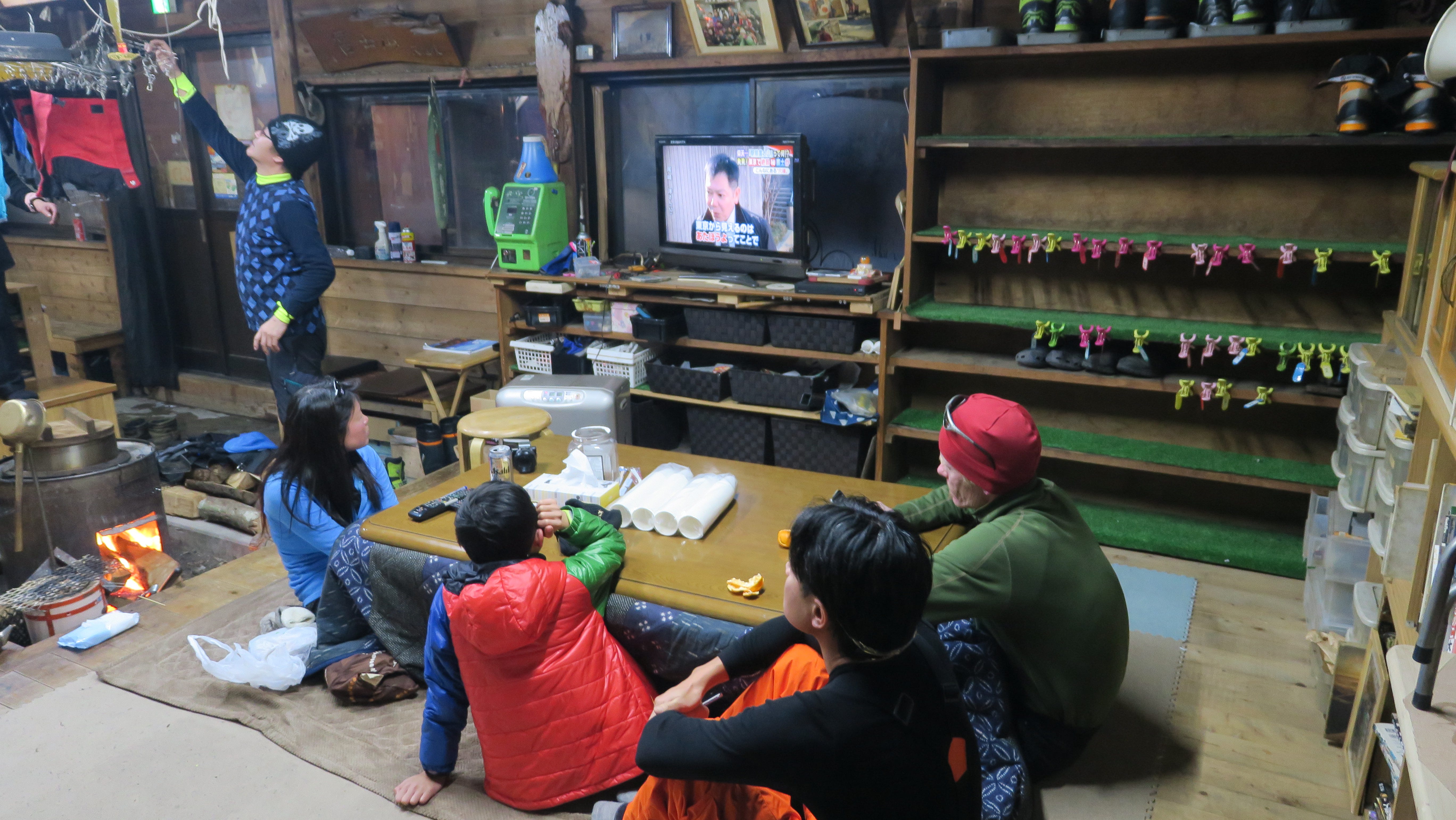
With over 100 years of history, Sato-goya is just about the only lodge open on the mountain in winter and has long served both as a base for those attempting Fuji during the season and as a hub for numerous search and rescue operations. Interestingly, it is also situated in an area that was known as ‘Chugu’ during the Muromachi period, a name meaning ‘the three shrines enshrined on the mountainside.’
‘Look! You can see Mount Fuji from here!’
Settling beside the irori fireplace, the presenter on the evening news cheerfully remarked that the weather was so clear that Mount Fuji was visible all the way from Tokyo. We continued watching as the TV broadcast images of the mountain taken in Kamakura, all the while digging into our shabu-shabu hotpot dinner.
Since then, my dad and I have made it a point to visit Satomi whenever we climb Fuji.
‘Oh my god. We made it!’
One of the most unforgettable moments of the next day came soon after we left. As we approached Station 6, the snow cleared and, for a brief moment, we could see the entire trail leading all the way up to Station 8. I stood there, watching Claus, Cheng, and Vanessa as they made their way up the grand slope ahead.
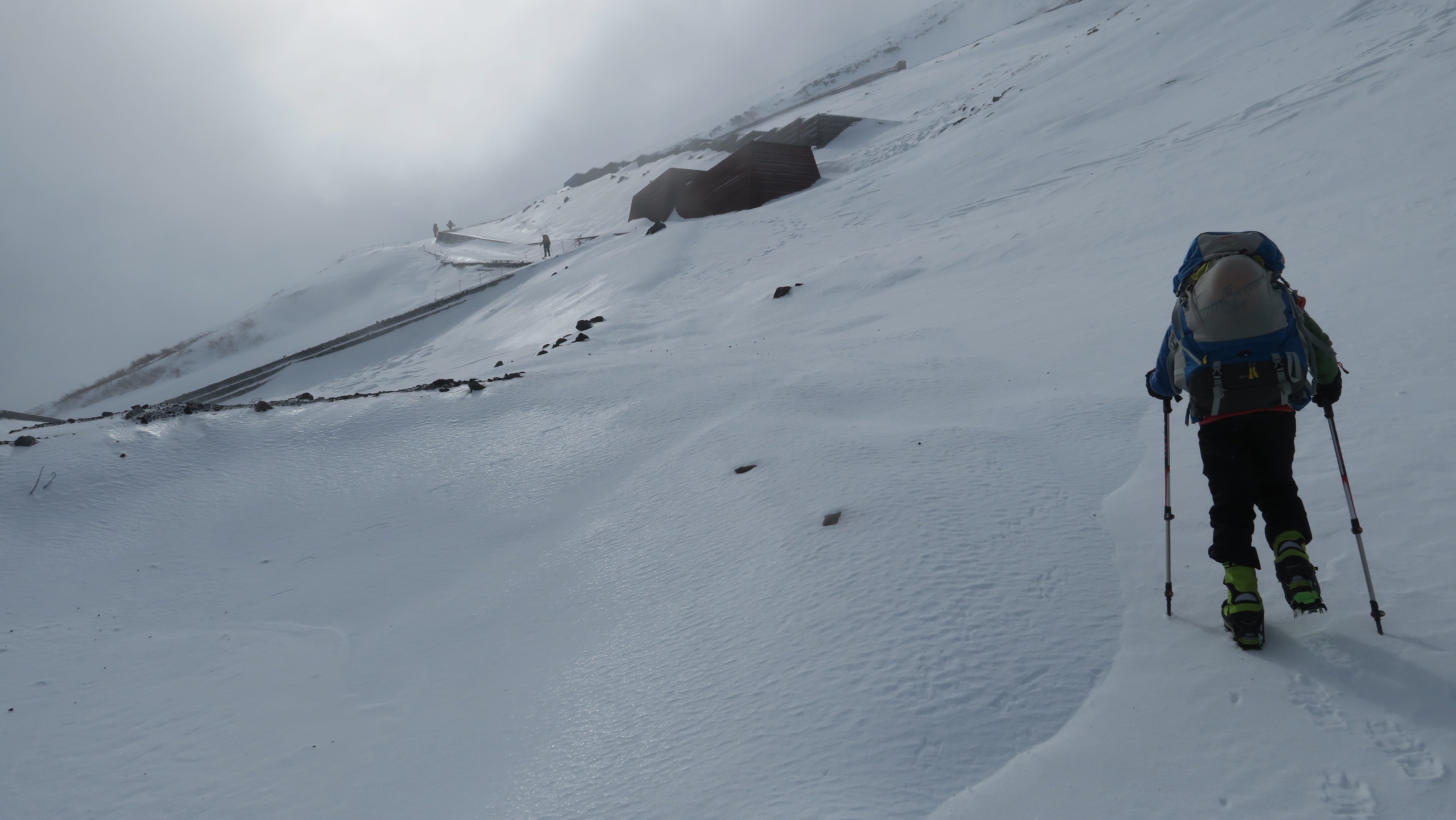
Though Dad was trying to get his camera out for a quick shot, no photo could ever do that view justice. For me, it was also knowing that we were probably the only people on what’s supposed to be the busiest mountain in the world during summer. It’s that same feeling you get when you wake up early and stroll down an empty high street; you feel like the whole place belongs to you.
Fired up and ready to go again, we pressed on, full steam ahead. And it wasn’t long until I spotted something in the distance, a torii gate.
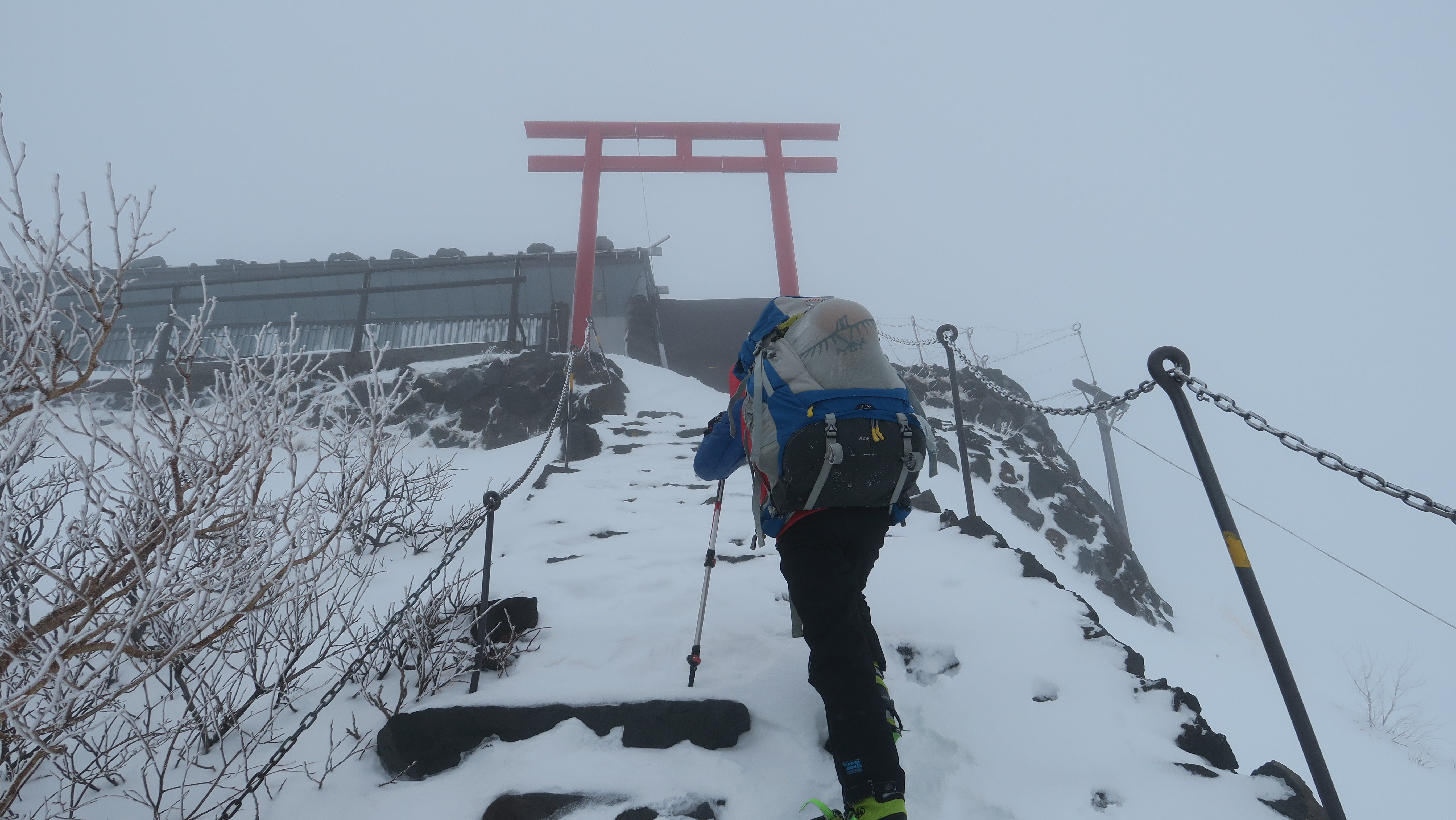
‘Could it be?’
For anyone who’s never tackled the Yoshida Trail, there’s a gate along the way that marks the start of the lower end of Station 8: the Tenpaigu Shrine. I remembered it well, mainly because I’d sat on the bench next to it six years ago, crying like a whiny idiot.
‘Oh my god! We made it! That’s Station 8, just ahead!’ I shouted.
I kept cheering with a huge grin plastered on my face, though a part of me couldn’t shake the feeling that it was almost too good to be true.
‘Come on! Let’s pitch our tent already!’
As you’ve probably guessed, that gate wasn’t it; we were still very much at Station 7. We kept climbing, yet the lodges ahead seemed endless. My brief spark of optimism quickly morphed into despair, and with no end in sight, any hope that today would be shorter than yesterday quickly went out the window.
However, it was then that things seemed to turn for the better…
Except they didn’t.
‘Dad! A tornado!’
Climbing a few steps, the corner of my eye caught glimpses of whirling columns of snow racing across the mountain at high speed. I had later found out that these were, in fact, rare, spinning vortexes known as ‘snow devils.’ While it looks pretty cool from a distance, as the name suggests, getting caught in one is anything but pleasant. They were probably some of the strongest gusts of wind I’ve ever felt. It’s as if the mountain itself was trying to blow me straight to Naria, which is kind of impressive considering I was hauling a backpack that already weighed about two-thirds of my body weight.
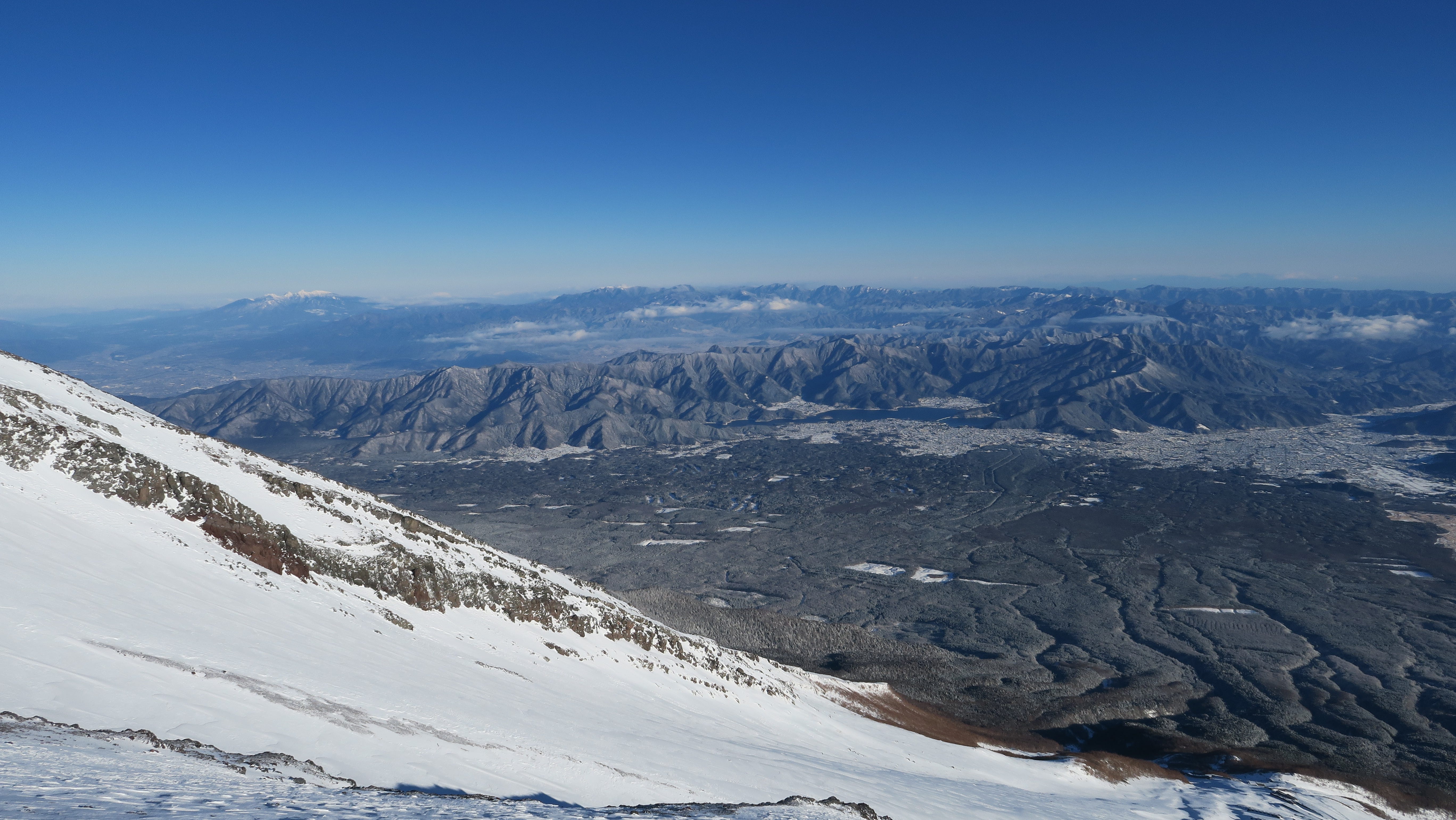
After hours of what felt like pure misery, we finally made it to Station 8. But with the sun disappearing behind the clouds, the temperature was dropping fast. I remember glancing at the little thermometer clipped to my backpack: -20°C. At temperatures like this, any water not stored in a thermal bottle freezes almost instantly.
Dehydrated and nursing a mild headache, I bent down and tried my best to take a sip from my reservoir, only to discover the entire tube had frozen solid. In a scene straight out of The Day After Tomorrow, I could only think, ‘Where the hell’s a vending machine when you need one?’
Unfortunately, giving up wasn’t really an option; heading down in my current state would probably take even longer. With Claus and Cheng already there, setting up their tent, I took a deep breath and powered through the last bit of the day.
The Day We Almost Died
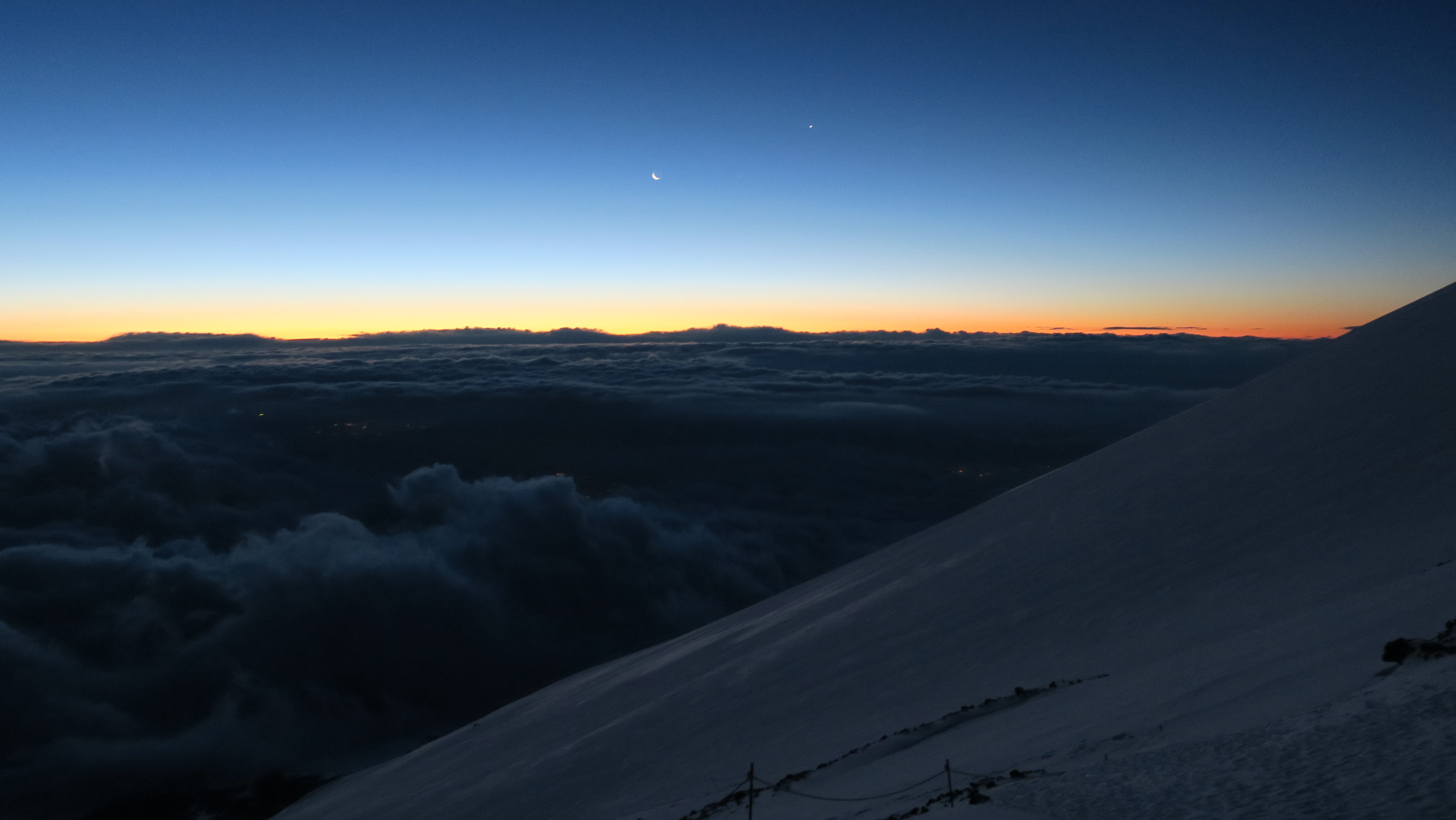
We woke up at 2 a.m. to a clear night sky and almost no wind. Despite the temperature nearing -30°C, I remember stepping out of the tent and seeing the sky blanketed with stars. If there’s one thing I took from this trip, it’s that no matter how tough it got, the scenery was always there to keep me going. I get chills just thinking about it.
‘Careful, guys, one step at a time. Son, you’re alright?’ Dad asked.
‘Yeah…’ I mumbled, shivering as my frozen snot hung from my nose.
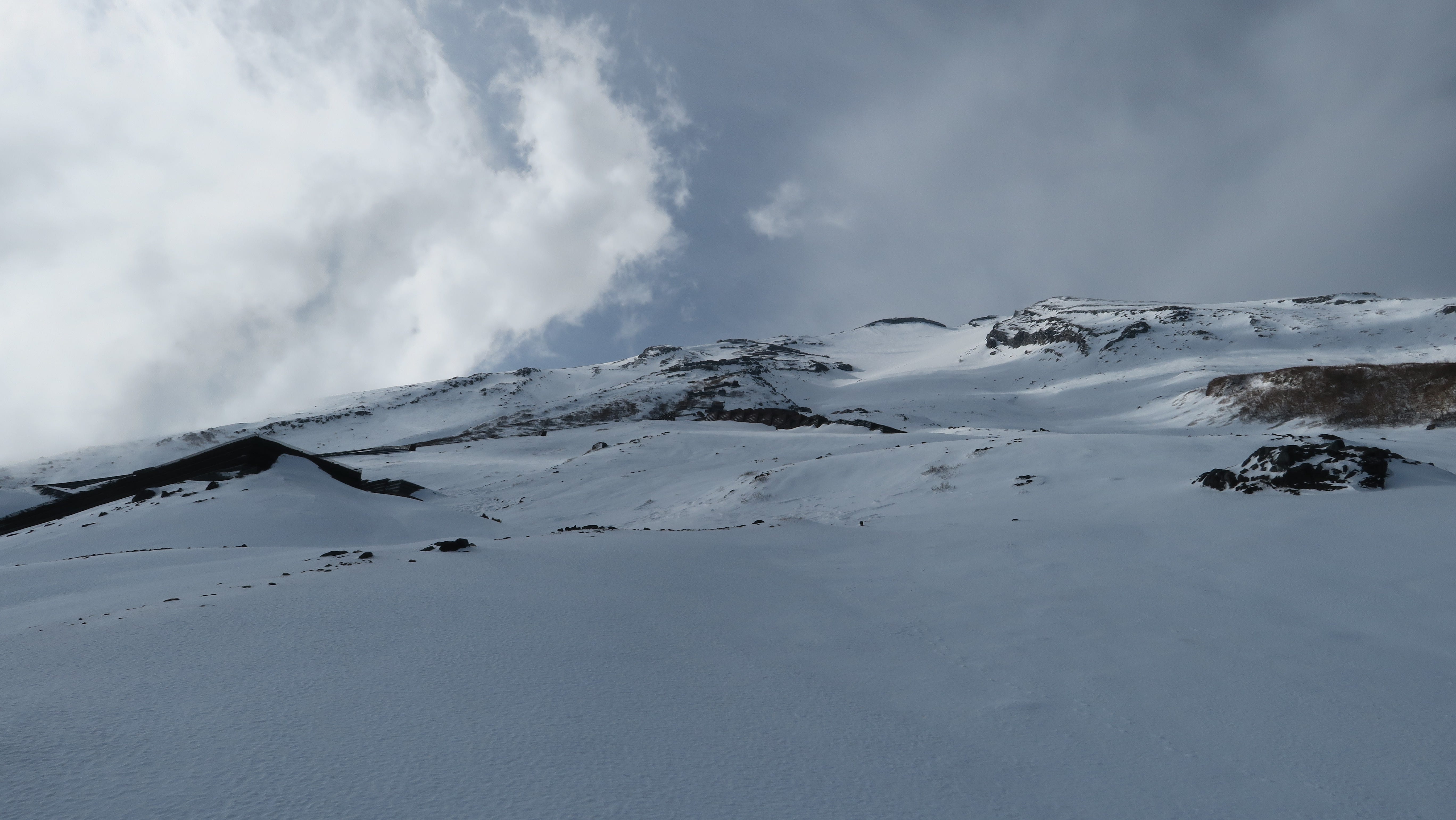
Leaving most of our gear behind, we roped up and began arguably the most dangerous section of the route. The entire trail to the summit was coated in a thin layer of ice. With no anchor points for protection, a single misstep could have sent all of us sliding 1,000 metres straight to our doom.
In fact, Dad returned a couple of years later, leading a group on another winter ascent of Mount Fuji, only for that very thing to happen. One of the participants bent down to rest, lost their balance, and tumbled, dragging the entire team along. Dad tried to perform a self-arrest with his ice axe, but it flew out of his hands the moment he hammered it into the ice. In the end, he jammed his crampons into the ice to stop the fall, breaking his leg and smashing into a nearby metal pole, fracturing his ribs.
Thankfully, that didn’t happen on this ascent, partly because Vanessa had lost one of her crampons. That’s right. I remember hearing her calling out to Dad when it happened, and the sheer panic on his face when he realised just how serious the situation was. With no other choice, he quickly decided to abandon the summit push and focus on finding the missing crampon.
‘One step at a time, folks. One step at a time,’ Dad repeated under his breath.
We slowly made our way down, careful not to make any misstep. As the sun rose in the distance, I looked up to the summit just a couple hundred of metres ahead.
‘Guess we’ll have to save it for next time.’ I sighed, disappointed.
‘Don’t worry, the summit will always be there,’ Dad reassured me. ‘Besides, today we’re already higher than any other mountain in Japan. That’s an achievement enough.’
Eventually, we managed to recover Vanessa’s missing crampon, which had apparently come loose shortly after we started. In hindsight, I’m really glad we didn’t push for the summit. Not long after our climb, we heard news of a solo Japanese climber who tried the summit that same week as well; he slipped and was later found dead. If that doesn’t convince you just how dangerous Mount Fuji can be in winter, I don’t know what will.
Returning to the forest below, less than two kilometres from the trailhead, I was completely at my wits’ end.
‘Wait… Guys! Look here!’ Dad called out.
Vanessa and I walked over to see what he’d found. As it happened, Dad had discovered what he believed to be a shortcut. After checking his GPS, he determined that this little side trail branching off from the main one would lead us straight back to the trailhead. It seemed our luck had finally turned…
Except it hadn’t.
Before long, we found ourselves sliding down a ridiculously steep slope into a valley. And while I could still hear the faint voices of other climbers up ahead, the so‑called shortcut ended rather abruptly.
To this day, I’m still not sure if I was just hallucinating from exhaustion, hearing those voices, but as doubt began to sink in, Dad decided that it wasn’t safe to continue. In the end, that little detour somehow cost us over an hour, and what was supposed to be the easy last bit of the trail turned into even more agony.
‘Please tell me we’re there…’ I groaned, feeling every muscle in my body ache.
My memories of those final hours are a bit fuzzy, but what I do remember is the overwhelming joy and relief I felt when I spotted our car in the distance. Tears streamed down my face as I summoned every last bit of energy to make my way to it.
Despite all the suffering and pain, this expedition was undoubtedly one of the most unique and eye‑opening experiences I’ve had as a child. Sitting in the back of the car on the way back to our hostel, I didn’t grumble about how tough the climb was, like I normally would. Instead, I gazed up at the towering trees blanketed in snow, and found myself thinking back to the question I’d asked myself a few days ago: What is it that drives me to climb?